MIRA
INFORM REPORT
|
Name :
|
GOURMET FUSION FOODS INC.
|
|
|
|
|
Registered Office :
|
5730 Uplander
Way, Ste 110, Culver City, CA 90230
|
|
|
|
|
Country :
|
United States
|
|
|
|
|
Date of Incorporation :
|
17.11.2000
|
|
|
|
|
Legal Form :
|
Corporation – Profit
|
|
|
|
|
Line of Business :
|
The Company provides global
seafood supply chain management solutions to retailers, foodservice
|
|
|
|
|
No. of Employees :
|
3
|
|
RATING
|
STATUS
|
PROPOSED CREDIT LINE
|
|
41-55
|
Ba
|
Overall operation is considered normal. Capable to meet normal
commitments.
|
Satisfactory
|
|
|
|
|
|
Status :
|
Satisfactory
|
|
|
|
|
Payment Behaviour :
|
No Complaints
|
|
|
|
|
Litigation :
|
Clear
|
NOTES:
Any query related to this report can be made
on e-mail: infodept@mirainform.com
while quoting report number, name and date.
ECGC Country Risk Classification List – June 30th, 2012
|
Country Name
|
Previous Rating
(31.03.2012)
|
Current Rating
(30.06.2012)
|
|
United States
|
A1
|
A1
|
|
Risk Category
|
ECGC
Classification
|
|
Insignificant
|
A1
|
|
Low
|
A2
|
|
Moderate
|
B1
|
|
High
|
B2
|
|
Very High
|
C1
|
|
Restricted
|
C2
|
|
Off-credit
|
D
|
United States - ECONOMIC OVERVIEW
The US
has the largest and most technologically powerful economy in the world, with a
per capita GDP of $48,100. In this market-oriented economy, private individuals
and business firms make most of the decisions, and the federal and state
governments buy needed goods and services predominantly in the private
marketplace. US business firms enjoy greater flexibility than their
counterparts in Western Europe and Japan in decisions to expand
capital plant, to lay off surplus workers, and to develop new products. At the
same time, they face higher barriers to enter their rivals' home markets than
foreign firms face entering US
markets. US firms are at or near the forefront in technological advances,
especially in computers and in medical, aerospace, and military equipment;
their advantage has narrowed since the end of World War II. The onrush of
technology largely explains the gradual development of a "two-tier labor
market" in which those at the bottom lack the education and the
professional/technical skills of those at the top and, more and more, fail to
get comparable pay raises, health insurance coverage, and other benefits. Since
1975, practically all the gains in household income have gone to the top 20% of
households. Since 1996, dividends and capital gains have grown faster than
wages or any other category of after-tax income. Imported oil accounts for
nearly 55% of US
consumption. Oil prices doubled between 2001 and 2006, the year home prices
peaked; higher gasoline prices ate into consumers' budgets and many individuals
fell behind in their mortgage payments. Oil prices increased another 50%
between 2006 and 2008. In 2008, soaring oil prices threatened inflation and
caused a deterioration in the US
merchandise trade deficit, which peaked at $840 billion. In 2009, with the
global recession deepening, oil prices dropped 40% and the US trade deficit shrank, as US domestic
demand declined, but in 2011 the trade deficit ramped back up to $803 billion,
as oil prices climbed once more. The global economic downturn, the sub-prime
mortgage crisis, investment bank failures, falling home prices, and tight
credit pushed the United
States into a recession by mid-2008. GDP
contracted until the third quarter of 2009, making this the deepest and longest
downturn since the Great Depression. To help stabilize financial markets, in
October 2008 the US Congress established a $700 billion Troubled Asset Relief
Program (TARP). The government used some of these funds to purchase equity in
US banks and industrial corporations, much of which had been returned to the
government by early 2011. In January 2009 the US Congress passed and President
Barack OBAMA signed a bill providing an additional $787 billion fiscal stimulus
to be used over 10 years - two-thirds on additional spending and one-third on
tax cuts - to create jobs and to help the economy recover. In 2010 and 2011,
the federal budget deficit reached nearly 9% of GDP; total government revenues
from taxes and other sources are lower, as a percentage of GDP, than that of
most other developed countries. The wars in Iraq
and Afghanistan required
major shifts in national resources from civilian to military purposes and
contributed to the growth of the US budget deficit and public debt -
through 2011, the direct costs of the wars totaled nearly $900 billion,
according to US government figures. In March 2010, President OBAMA signed into
law the Patient Protection and Affordable Care Act, a health insurance reform
bill that will extend coverage to an additional 32 million American citizens by
2016, through private health insurance for the general population and Medicaid
for the impoverished. Total spending on health care - public plus private -
rose from 9.0% of GDP in 1980 to 17.9% in 2010. In July 2010, the president
signed the DODD-FRANK Wall Street Reform and Consumer Protection Act, a law
designed to promote financial stability by protecting consumers from financial
abuses, ending taxpayer bailouts of financial firms, dealing with troubled
banks that are "too big to fail," and improving accountability and
transparency in the financial system - in particular, by requiring certain
financial derivatives to be traded in markets that are subject to government
regulation and oversight. Long-term problems include inadequate investment in
deteriorating infrastructure, rapidly rising medical and pension costs of an
aging population, sizable current account and budget deficits - including
significant budget shortages for state governments - energy shortages, and
stagnation of wages for lower-income families.
Company name and address
GOURMET FUSION FOODS INC.
Address: 5730 Uplander Way, Ste 110, Culver
City, CA 90230
- USA
Telephone: +1
310-568-0038
Fax: +1 310-568-0198
Website: www.gourmetfusionfoods.com
Company sammary
Corporate ID#: C2320582
State: California
Judicial form: Corporation – Profit
Date incorporated: 11-17-2000
Stock: -
Value: -
Name of manager: Siddharth
SETHI
ACTIVITIES
& OPERATIONS
IST
Business:
The Company provides global
seafood supply chain management solutions to retailers, foodservice
distributors and manufacturers throughout North America.
Products include shrimps, fresh fillets, scallops, lobsters, conch, and
much more.
Suppliers include:
PT.SATU TIGA ENAM DELAPAN
Jl.Yos Sudarso no.72 Banyuwangi Indonesia
PT. BAHARI MAKMUR SEJATI
Utama Modern Industri Aa1 Serang, Banten 42186 Indonesia
KADER EXPORTS P LTD.
A Merchand Mansion
Wing, 16 Madame Cama Rd,
Coloba, Mumbai 400001 India.
EIN: -
Staff: 3
Operations & branches:
At the headquarters, we
find the corporate office, on lease.
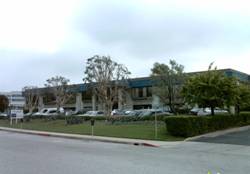
The Company maintains also a
branch located:
29/1644-A
Thykoodam, Vytilla
Cochin 682019
India
SHAREHOLDERS & MANAGERS
Shareholders:
Siddharth SETHI is a major
shareholder.
Management:
Siddharth SETHI, President
and CEO.
As far as we know, he is the President and CEO of:
SEAFOOD MANAGEMENT SERVICES, INC.
2109 Perry
Avenue, Redondo Beach, CA
90278
Incorporated in California
on 10-15-2004
ID# C2679196
FINANCIALS
In United States,
privately held corporations are not required to publish any financials.
On a direct call, nobody
was available to answer our questions.
We sent a fax but no answer
received.
However, sales estimate for
year 2011 is in the range of USD 1,000,000=
The business is said to be
profitable.
Banks: East West Bank
9300 Flair
Drive, El Monte, CA 91731
Ph: 626-582-8050
LEGAL FILINGS
Legal filings
& complaints:
As of today date, there is no legal filing pending with the Courts.
Secured debts
summary (UCC):
File number: 11-7272248155
Date filed: 06-07-2011
Lapse date: 06-07-2016
Secured Party: East West Bank
9300 Flair Drive, El Monte, CA 91731