MIRA
INFORM REPORT
|
Report Date : |
10.12.2013 |
IDENTIFICATION DETAILS
|
Name : |
VERIMATRIX, INC. |
|
|
|
|
Registered Office : |
6825 Flanders Drive, San Diego, CA 92121 |
|
|
|
|
Country : |
United States |
|
|
|
|
Date of Incorporation : |
02.11.2000 |
|
|
|
|
Legal Form : |
Corporation – Profit |
|
|
|
|
Line of Business : |
subject develops 3-dimensional content security
solutions for pay-TV service providers worldwide. Subject offers Video Content Authority System (VCAS), a software-based
content security solution for cable, satellite, terrestrial, and IPTV
operators; and VideoMark, a forensic video watermarking solution. Subject also provides VCAS for IPTV, which eliminates the
vulnerabilities related to smart card based architectures; VCAS for Internet
TV, which offers a system for authenticated and protected video service
delivery to set-top boxes, connected TVs, PCs/Macs, and various mobile
devices over un-managed networks; VCAS for Cable IPTV, a solution that
integrates third-party CMTS bypass technology with VCAS to enable the
conversion of an existing cable system to an asymmetric IP network for IPTV;
and VCAS for DVB, which supports the use of a unified protection system for
content delivered through DVB and IP segments of a hybrid pay-TV network. |
|
|
|
|
No. of Employees : |
62 |
RATING & COMMENTS
|
MIRA’s Rating : |
B |
|
RATING |
STATUS |
PROPOSED CREDIT LINE |
|
|
26-40 |
B |
Capability to overcome financial difficulties seems comparatively
below average. |
Small |
|
Status : |
Moderate |
|
|
|
|
Payment Behaviour : |
Slow but Correct |
|
|
|
|
Litigation : |
Clear |
NOTES :
Any query related to this report can be made
on e-mail: infodept@mirainform.com
while quoting report number, name and date.
ECGC Country Risk Classification List – September 30th, 2013
|
Country Name |
Previous Rating (30.06.2013) |
Current Rating (30.09.2013) |
|
United
States |
A1 |
A1 |
|
Risk Category |
ECGC
Classification |
|
Insignificant |
A1 |
|
Low |
A2 |
|
Moderate |
B1 |
|
High |
B2 |
|
Very High |
C1 |
|
Restricted |
C2 |
|
Off-credit |
D |
united StaTes ECONOMIC OVERVIEW
The US has the largest and most
technologically powerful economy in the world, with a per capita GDP of
$49,800. In this market-oriented economy, private individuals and business firms
make most of the decisions, and the federal and state governments buy needed
goods and services predominantly in the private marketplace. US business firms
enjoy greater flexibility than their counterparts in Western Europe and Japan
in decisions to expand capital plant, to lay off surplus workers, and to
develop new products. At the same time, they face higher barriers to enter
their rivals' home markets than foreign firms face entering US markets. US
firms are at or near the forefront in technological advances, especially in
computers and in medical, aerospace, and military equipment; their advantage
has narrowed since the end of World War II. The onrush of technology largely
explains the gradual development of a "two-tier labor market" in
which those at the bottom lack the education and the professional/technical
skills of those at the top and, more and more, fail to get comparable pay
raises, health insurance coverage, and other benefits. Since 1975, practically
all the gains in household income have gone to the top 20% of households. Since
1996, dividends and capital gains have grown faster than wages or any other
category of after-tax income. Imported oil accounts for nearly 55% of US
consumption. Crude oil prices doubled between 2001 and 2006, the year home
prices peaked; higher gasoline prices ate into consumers' budgets and many
individuals fell behind in their mortgage payments. Oil prices climbed another
50% between 2006 and 2008, and bank foreclosures more than doubled in the same
period. Besides dampening the housing market, soaring oil prices caused a drop
in the value of the dollar and a deterioration in the US merchandise trade
deficit, which peaked at $840 billion in 2008. The sub-prime mortgage crisis,
falling home prices, investment bank failures, tight credit, and the global
economic downturn pushed the United States into a recession by mid-2008. GDP
contracted until the third quarter of 2009, making this the deepest and longest
downturn since the Great Depression. To help stabilize financial markets, in
October 2008 the US Congress established a $700 billion Troubled Asset Relief
Program (TARP). The government used some of these funds to purchase equity in
US banks and industrial corporations, much of which had been returned to the
government by early 2011. In January 2009 the US Congress passed and President
Barack OBAMA signed a bill providing an additional $787 billion fiscal stimulus
to be used over 10 years - two-thirds on additional spending and one-third on
tax cuts - to create jobs and to help the economy recover. In 2010 and 2011,
the federal budget deficit reached nearly 9% of GDP. In 2012 the federal
government reduced the growth of spending and the deficit shrank to 7.6% of
GDP. Wars in Iraq and Afghanistan required major shifts in national resources
from civilian to military purposes and contributed to the growth of the budget
deficit and public debt. Through 2011, the direct costs of the wars totaled
nearly $900 billion, according to US government figures. US revenues from taxes
and other sources are lower, as a percentage of GDP, than those of most other
countries. In March 2010, President OBAMA signed into law the Patient
Protection and Affordable Care Act, a health insurance reform that will extend
coverage to an additional 32 million American citizens by 2016, through private
health insurance for the general population and Medicaid for the impoverished.
Total spending on health care - public plus private - rose from 9.0% of GDP in
1980 to 17.9% in 2010. In July 2010, the president signed the DODD-FRANK Wall
Street Reform and Consumer Protection Act, a law designed to promote financial
stability by protecting consumers from financial abuses, ending taxpayer
bailouts of financial firms, dealing with troubled banks that are "too big
to fail," and improving accountability and transparency in the financial
system - in particular, by requiring certain financial derivatives to be traded
in markets that are subject to government regulation and oversight. In December
2012, the Federal Reserve Board announced plans to purchase $85 billion per
month of mortgage-backed and Treasury securities in an effort to hold down
long-term interest rates, and to keep short term rates near zero until
unemployment drops to 6.5% from the December rate of 7.8%, or until inflation
rises above 2.5%. Long-term problems include stagnation of wages for
lower-income families, inadequate investment in deteriorating infrastructure,
rapidly rising medical and pension costs of an aging population, energy
shortages, and sizable current account and budget deficits - including
significant budget shortages for state governments.
|
Source : CIA |
Company name & address
Company name: VERIMATRIX, INC.
Address: 6825 Flanders Drive, San Diego, CA
92121 - USA
Telephone: +1
858-677-7800
Fax: +1 858-677-7804
Website: www.verimatrix.com
Company summary
Corporate ID#: C2267751
State: California
Judicial form: Corporation – Profit
Date incorporated: November
2, 2000
Stock: -
Value: -
Name of manager: Thomas
A. MUNRO
ACTIVITIES
& OPERATIONS
Business:
Verimatrix, Inc. develops 3-dimensional content security solutions for
pay-TV service providers worldwide.
It offers Video Content Authority System (VCAS), a software-based
content security solution for cable, satellite, terrestrial, and IPTV
operators; and VideoMark, a forensic video watermarking solution. The company
also provides VCAS for IPTV, which eliminates the vulnerabilities related to
smart card based architectures; VCAS for Internet TV, which offers a system for
authenticated and protected video service delivery to set-top boxes, connected
TVs, PCs/Macs, and various mobile devices over un-managed networks; VCAS for
Cable IPTV, a solution that integrates third-party CMTS bypass technology with
VCAS to enable the conversion of an existing cable system to an asymmetric IP
network for IPTV; and VCAS for DVB, which supports the use of a unified
protection system for content delivered through DVB and IP segments of a hybrid
pay-TV network.
In addition, it offers ViewRight STB for IPTV and DVB, a package of
portable embedded code that implements the VCAS security functions within STBs
in IPTV and DVB pay-TV systems; ViewRight Desktop for PC Player, which decrypts
broadcast and VOD content within VCAS protected IPTV systems; ViewRight Web, a
package of portable code that implements the VCAS for Internet TV device
authentication functions; ViewRight Professional, a package of portable
embedded code that implements the VCAS security functions within Professional
Receiver equipment in pay-TV systems; Verimatrix Remote Stream Manager, which
optimizes the configuration of IPTV wholesaler/retailer configurations;
Verimatrix Service Information Server, an optional component of VCAS for DVB;
and MultiCAS/IP, MultiCAS/DVB, and real time encryption server components.
The company was founded in 1999 and is headquartered in San Diego,
California with local sales and customer care support offices in the Americas,
Europe, and Asia; and a development center in Paris, France.
Office of the Foreign
Assets Control (OFAC):
The company is not listed on the OFAC list.
The Specially Designated Nationals (SDN) List is a publication of OFAC
which lists individuals and organizations with whom United States citizens and
permanent residents are prohibited from doing business.
EIN: 33-0935891
Staff: 62
Operations & branches:
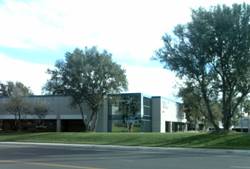
At the headquarters, we
find the corporate office, on lease.
SHAREHOLDERS & MANAGERS
Shareholders:
Investors include:
- The Goldman Sachs Group
Inc.
-
- Mission Ventures Management LLC
and others.
Management:

Thomas A. MUNRO is CEO
He served as the Chief Financial Officer of Donnelley Enterprise
Solutions Inc. since January 1998 and served as its Vice President, Corporate
Controller and Assistant Secretary since March 1997. He served as President of
Kratos Defense & Security Solutions, Inc. (alternate name Wireless
Facilities, Inc). He also served as Chief Financial Officer of WFI from 1997 to
2000, and as President from September of 2000 until his retirement in February,
2003.
Prior to joining WFI, Mr. Munro was founder and served as Chief
Executive Officer of @Market, a retail sporting goods website. From 1994 to
1995, he served as Chief Financial Officer for Precision Digital Images, Inc.
As a key Member of Precision Digital Images's Management Team, he was
responsible for raising seed capital for Digital Images, as well as
implementing financial and operational controls. From 1981 to 1994, he was
employed with MetLife Capital Corporation, where he served as Chief Financial
Officer. Mr. Munro has over 22 years of experience in both finance and
technology. He has been Director of Pac-west Telecomm, Inc. since April 24,
2003. He serves as a Director of Airgain Inc. and CommNexus San Diego (formerly
San Diego Telecom Council). He serves as Director of Kineticom Inc. He served
as a Director of Concerto Networks Inc.
Mr. Munro served as a Director of Precision Digital Images.
He served as a Director of MetLife Capital Corporation from 1992 to 1994.
He has co-authored two college level text books on computer programming.
Mr. Munro holds a bachelor's degree in business administration and an
MBA from the University of Washington.
Tim DRISCOLL is the CFO
Petr PETERKA is the CTO
Subsidiaries
And Partnership:
None
Verimatrix GmbH
Fraunhoferstr. 7
85737 Ismaning, Germany
Tel: +49-89-55265-100
Fax: +49-89-55265-101
Verimatrix Singapore
101 Thomson Road
#22-01A United Square, Singapore 307591
Tel: +65-6353-9430
Fax: +65-6252-5185
Verimatrix - China
A2705, Fudun Center
No.58, East 3rd Ring South Road, Chaoyang District, Beijing 100022, China
Tel: +86 10 5867 3818
Fax: +86 10 5867 3818
Verimatrix - India
Level 15, Concorde Towers
UB City, 1 Vittal Mallya Road, Bangalore – 560001, India
Tel: +91 80 6759 0404
Fax: +91 80 6759 0400
FINANCIALS
In United States, privately
held corporations are not required to publish any financials.
On a direct call, a
financial assistant controlled the present report.
Sales declared for year 2012
is in the range of USD 6,500,000=
The business is said to be
profitable.
Banks: Bridge Bank
55 Almaden Blvd, San Jose, CA 95113
|
|
Ph: +1 408-423-8512
LEGAL FILINGS
Legal filings
& complaints:
As of today date, there is no legal filing pending with the Courts.
Secured debts summary (UCC):
Several