MIRA INFORM REPORT
|
Report Date : |
06.03.2013 |
IDENTIFICATION DETAILS
|
Name : |
XIAMEN
CHINA STONE ENTERPRISE CO., LTD. |
|
|
|
|
Registered Office : |
West Of 5/F, No. 8 Plant, Wuyi
Industry & Trade Company, No. 189, Lianyue Road, Siming District, Xiamen,
Fujian Province 361012 PR |
|
|
|
|
Country : |
China |
|
|
|
|
Financials (as on) : |
31.12.2011 |
|
|
|
|
Date of Incorporation : |
30.03.2006 |
|
|
|
|
Com. Reg. No.: |
350203200048752 |
|
|
|
|
Legal Form : |
Limited Liabilities Company |
|
|
|
|
Line of Business : |
Subject engaged in importing and exporting stones |
|
|
|
|
No. of Employees : |
15 |
RATING & COMMENTS
|
MIRA’s Rating : |
Ca |
|
RATING |
STATUS |
PROPOSED CREDIT LINE |
|
|
11-25 |
Ca |
Adverse factors are apparent. Repayment of interest and
principal sums in default or expected to be in default upon maturity |
Limited
with full security |
|
Status : |
Moderate |
|
Payment Behaviour : |
Slow |
|
Litigation : |
Clear |
NOTES
:
Any query related to this report
can be made on e-mail: infodept@mirainform.com while quoting report
number, name and date.
ECGC Country Risk Classification List – June 30th, 2012
|
Country Name |
Previous Rating (31.03.2012) |
Current Rating (30.06.2012) |
|
China |
A2 |
A2 |
|
Risk Category |
ECGC
Classification |
|
Insignificant |
A1 |
|
Low |
A2 |
|
Moderate |
B1 |
|
High |
B2 |
|
Very High |
C1 |
|
Restricted |
C2 |
|
Off-credit |
D |
china - ECONOMIC OVERVIEW
Since the late 1970s China has moved from a closed, centrally planned system to a more market-oriented one that plays a major global role - in 2010 China became the world's largest exporter. Reforms began with the phasing out of collectivized agriculture, and expanded to include the gradual liberalization of prices, fiscal decentralization, increased autonomy for state enterprises, creation of a diversified banking system, development of stock markets, rapid growth of the private sector, and opening to foreign trade and investment. China has implemented reforms in a gradualist fashion. In recent years, China has renewed its support for state-owned enterprises in sectors it considers important to "economic security," explicitly looking to foster globally competitive national champions. After keeping its currency tightly linked to the US dollar for years, in July 2005 China revalued its currency by 2.1% against the US dollar and moved to an exchange rate system that references a basket of currencies. From mid 2005 to late 2008 cumulative appreciation of the renminbi against the US dollar was more than 20%, but the exchange rate remained virtually pegged to the dollar from the onset of the global financial crisis until June 2010, when Beijing allowed resumption of a gradual appreciation. The restructuring of the economy and resulting efficiency gains have contributed to a more than tenfold increase in GDP since 1978. Measured on a purchasing power parity (PPP) basis that adjusts for price differences, China in 2010 stood as the second-largest economy in the world after the US, having surpassed Japan in 2001. The dollar values of China's agricultural and industrial output each exceed those of the US; China is second to the US in the value of services it produces. Still, per capita income is below the world average. The Chinese government faces numerous economic challenges, including: (a) reducing its high domestic savings rate and correspondingly low domestic demand; (b) sustaining adequate job growth for tens of millions of migrants and new entrants to the work force; (c) reducing corruption and other economic crimes; and (d) containing environmental damage and social strife related to the economy's rapid transformation. Economic development has progressed further in coastal provinces than in the interior, and by 2011 more than 250 million migrant workers and their dependents had relocated to urban areas to find work. One consequence of population control policy is that China is now one of the most rapidly aging countries in the world. Deterioration in the environment - notably air pollution, soil erosion, and the steady fall of the water table, especially in the North - is another long-term problem. China continues to lose arable land because of erosion and economic development. The Chinese government is seeking to add energy production capacity from sources other than coal and oil, focusing on nuclear and alternative energy development. In 2010-11, China faced high inflation resulting largely from its credit-fueled stimulus program. Some tightening measures appear to have controlled inflation, but GDP growth consequently slowed to near 9% for 2011. An economic slowdown in Europe is expected to further drag Chinese growth in 2012. Debt overhang from the stimulus program, particularly among local governments, and a property price bubble challenge policy makers currently. The government's 12th Five-Year Plan, adopted in March 2011, emphasizes continued economic reforms and the need to increase domestic consumption in order to make the economy less dependent on exports in the future. However, China has made only marginal progress toward these rebalancing goals.
|
Source
: CIA |
COMPANY NAME &
ADDRESS
XIAMEN
CHINA STONE ENTERPRISE CO., LTD.
(trade
name: CSE Group Limited)
WEST OF
5/F, NO. 8 PLANT, WUYI INDUSTRY & TRADE COMPANY
NO. 189,
LIANYUE ROAD, SIMING DISTRICT
XIAMEN, FUJIAN
PROVINCE 361012 PR CHINA
TEL: 86
(0) 592-5339126/5039344
FAX: 86
(0) 592-5036815
EXECUTIVE SUMMARY
Date of Registration : march 30, 2006
REGISTRATION NO. : 350203200048752
LEGAL FORM : Limited liabilities company
REGISTERED CAPITAL : CNY 1,000,000
staff : 15
BUSINESS CATEGORY :
trading
Revenue : CNY 11,400,000 (AS OF
DEC. 31, 2011)
EQUITIES : CNY -530,000 (AS OF DEC. 31, 2011)
WEBSITE : www.xmchinastone.com
E-MAIL :
xmchinastone@xmchinastone.com
PAYMENT : AVERAGE
MARKET CONDITION : fair
FINANCIAL CONDITION : FAIR
OPERATIONAL TREND : FAIR
GENERAL REPUTATION : FAIR
EXCHANGE RATE : CNY 6.23 = USD
1
Adopted
abbreviations (as follows)
SC - Subject Company
(the company inquired by you)
N/A – Not available
CNY – China Yuan Ren
Min Bi
OPERATIONAL TREND
& GENERAL REPUTATION
This section aims at indicating the relative positions of SC in respect
of its operational trend & general reputation
Operational Trend:- General
Reputation:-
Upward Excellent
Steady Good
Fairly Steady Fairly
Good
Ordinary Average
Fair Fair
Stagnant Detrimental
Downward Not
known
Not known Not
yet be determined
Not yet be determined
LEGAL STATUS &
HISTORY
***Note: SC’s detailed
address should be the heading one.
SC’s name should be the heading one, while CSE
Group Limited (the given name) is SC’s related company registered in Hong Kong,
and SC also uses this name as its trade name.
SC was
established as a limited liabilities company of PRC with State Administration
of Industry & Commerce (SAIC) under registration No.: 350203200048752 on March 30,
2006.
SC’s Organization Code Certificate
No.: 78416627-8
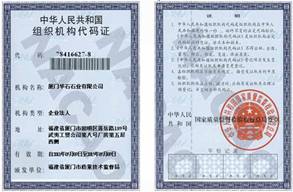
SC’s registered capital: cny 1,000,000
SC’s paid-in capital: cny 1,000,000
Registration Change Record:-
No significant changes of SC have
been noted in SAIC since its incorporation.
Current Co search indicates SC’s shareholders & chief
executives are as follows:-
|
Name of Shareholder (s) |
% of Shareholding |
|
Su Yucai |
60 |
|
Su Wenhui |
40 |
SC’s Chief Executives:-
|
Position |
Name |
|
Legal Representative, Chairman
and General Manager |
Su Yucai |
|
Supervisor |
Su Wenhui |
RECENT DEVELOPMENT
No recent development was found during our checks at present.
SHAREHOLDER CHART
& BACKGROUND
Name %
of Shareholding
Su Yucai 60
Su Wenhui 40
MANAGEMENT
Su Yucai, Legal
Representative, Chairman and General Manager
------------------------------------------------------------------------------------------------
Ø
Gender: M
Ø
Age: 32
Ø
Working
experience (s):
At present, working in SC as legal representative, chairman
and general manager
Su Wenhui, Supervisor
-----------------------------------------
Ø
Gender: M
BUSINESS OPERATION
SC’s registered
business scope includes wholesaling and retailing prepackaged food; import and export of various goods and technologies,
excluding the goods forbidden by the government.
SC is mainly
engaged in importing and exporting stones.
SC’s products
mainly include: stones.
SC sources its materials 80%
from domestic market, and 20% from overseas market, mainly India. SC sells 20% of
its products in domestic market, and 80% to overseas market, mainly Poland,
Hungary, etc.
The
buying terms of SC include Check, T/T, L/C and Credit of 30-60 days. The
payment terms of SC include Check, T/T, L/C and Credit of 30-60 days.
*Major
Client*
----------------
Emi
Aldana
Staff & Office:
--------------------------
SC is
known to have approx. 15 staff
at present.
SC rents an area
as its operating office, but the detailed information is unknown.
RELATED COMPANY
n
CSE Group Limited (Hong Kong)
----------------------------------------------
CR No.: 1259201
Date of Registration:
24-JUL-2008
Company Status: Private
Active Status: Live
PAYMENT
Overall payment appraisal:
( ) Excellent ( ) Good (X) Average ( ) Fair ( ) Poor ( ) Not yet be determined
The appraisal serves as a reference to reveal SC's payments habits and
ability to pay. It is based on the 3
weighed factors: Trade payment experience (through current enquiry with SC's
suppliers), our delinquent payment and our debt collection record concerning
SC.
Trade payment experience: SC did not
provide any name of trade/service suppliers and we have no other sources to
conduct the enquiry at present.
Delinquent payment record: None in our
database.
Debt collection record: No overdue amount
owed by SC was placed to us for collection within the last 6 years.
BANKING
Basic Bank
China Construction Bank Xiamen Wucun Sub-branch
AC#:
35101517001052501286
FINANCIALS
Balance Sheet
|
Unit: CNY’000 |
As
of Dec. 31, 2011 |
|
290 |
|
|
Notes receivable |
0 |
|
Accounts
receivable |
-270 |
|
Advances to
suppliers |
0 |
|
Other receivable |
50 |
|
Inventory |
380 |
|
Non-current
assets within one year |
0 |
|
Other current
assets |
0 |
|
|
------------------ |
|
Current assets |
450 |
|
Fixed assets |
40 |
|
Construction in
progress |
0 |
|
Intangible
assets |
0 |
|
Long-term
investment |
0 |
|
Deferred income
tax assets |
0 |
|
Other
non-current assets |
0 |
|
|
------------------ |
|
Total assets |
490 |
|
|
============= |
|
Short-term loans |
0 |
|
Notes payable |
0 |
|
Accounts payable |
900 |
|
Welfares payable |
0 |
|
Taxes payable |
-30 |
|
Advances from
clients |
0 |
|
Other payable |
100 |
|
Other current
liabilities |
50 |
|
|
------------------ |
|
Current
liabilities |
1,020 |
|
Non-current
liabilities |
0 |
|
|
------------------ |
|
Total
liabilities |
1,020 |
|
Equities |
-530 |
|
|
------------------ |
|
Total
liabilities & equities |
490 |
|
|
============= |
Income Statement
|
Unit: CNY’000 |
As of Dec. 31,
2011 |
|
Revenue |
11,400 |
|
Cost of sales |
9,530 |
|
Sales expense |
1,220 |
|
Management expense |
830 |
|
Finance expense |
0 |
|
Profit before
tax |
40 |
|
Less: profit tax |
10 |
|
30 |
Important Ratios
=============
|
|
As of Dec. 31, 2011 |
|
*Current ratio |
0.44 |
|
*Quick ratio |
0.07 |
|
*Liabilities
to assets |
2.08 |
|
*Net profit
margin (%) |
0.26 |
|
*Return on
total assets (%) |
6.12 |
|
*Inventory /
Revenue ×365 |
13 days |
|
*Accounts
receivable/ Revenue ×365 |
-- |
|
*
Revenue/Total assets |
23.27 |
|
* Cost of
sales / Revenue |
0.84 |
FINANCIAL COMMENTS
PROFITABILITY:
AVERAGE
l
The revenue of SC appears
average in its line.
l
SC’s net profit margin is average.
l
SC’s return on total assets is fairly good.
l
SC’s cost of sales is average, comparing with its revenue.
LIQUIDITY:
FAIR
l
The current ratio of SC is maintained in a poor
level.
l
SC’s quick ratio is maintained in a poor level.
l
The inventory of SC appears large.
l
SC has no short-term loans.
l
SC’s revenue is in an
average level, comparing with the size of its total assets.
LEVERAGE:
POOR
l
The debt ratio of SC is too high.
l
The risk for SC to go bankrupt is fairly high
Overall financial
condition of the SC: Fair.
CONCLUSIONS
SC is considered small-sized in its line with fair financial
conditions. The large amount of inventory may be a threat
to SC’s financial condition.
DIAMOND INDUSTRY –
INDIA
-
From time immemorial, India is well known in the world as the birthplace
for diamonds. It is difficult to trace the origin of diamonds but history
says that in the remote past, diamonds were mined only in India. Diamond
production in India can be traced back to almost 8th Century B.C.
India, in fact, remained undisputed leader till 18th Century
when Brazilian fields were discovered in 1725 followed by emergence of S.
Africa, Russia and Australia.
-
The achievement of the Indian diamond industry was possible only due to
combination of the manufacturing skills of the Indian workforce and the
untiring and unflagging efforts of the Indian diamantaires, supported by
progressive Government policies.
-
The area of study of family owned diamond businesses derives its
importance from the huge conglomerate of family run organizations which operate
in the diamond industry since many generations.
-
Some of the basic traits of family run business enterprises include spirit
of entrepreneurship, mutual trust lowers transaction costs, small, nimble and
quick to react, information as a source of advantage and philanthropy.
-
Family owned diamond businesses need to improve on many fronts including
higher standard of corporate governance, long-term performance – focused
strategies, modern management and technology.
-
The diamond jewellery industry in India today may be more than Rs 60000
mil and is rated amongst the fastest growing in the world. Indi ranks
third in the world in domestic diamond consumption.
-
Utmost caution is to be exercised while dealing with some medium and
large diamond traders which are usually engaged in fictitious import – export,
inter-company transactions, financially assisted by banks. In the process, several
public sector banks lost several hundred million rupees. They mostly diverted
borrowed money for diamond business into real estate and capital markets.
-
Excerpts from Times of India dated 30th October 2010 is as
under –
DIAMOND SAGA –
DIRTY DOZEN STUCK WITH 2K CR DEBT
This could be the biggest credibility crisis
the Indian diamond industry has ever faced. Fifteen banks run the risk of
losing Rs 2000 crore lent to a dozen diamond firms in Surat. Until about two
months ago, they had not repaid these dues. Bankers believe many
diamantaires borrowed money during the economic downturn two years ago and
diverted funds to businesses like real estate and capital markets. Many of
themselves made money from these businesses but their diamond companies have
gone sick and declared insolvency.
-
Most of the money borrowed from the banks in the name of their diamond
business has been diverted in real estate and the share market. The banks are
not in a position to seize their properties because in many cases, these were purchased
in the name of their relatives and friends.
FOREIGN EXCHANGE RATES
|
Currency |
Unit
|
Indian
Rupees |
|
US Dollar |
1 |
Rs.54.65 |
|
UK Pound |
1 |
Rs.82.65 |
|
Euro |
1 |
Rs.71.20 |
INFORMATION DETAILS
|
Report
Prepared by : |
NLM |
RATING EXPLANATIONS
|
RATING |
STATUS |
PROPOSED CREDIT LINE |
|
|
>86 |
Aaa |
Possesses an extremely sound financial base with the
strongest capability for timely payment of interest and principal sums |
Unlimited |
|
71-85 |
Aa |
Possesses adequate working capital. No caution needed for
credit transaction. It has above average (strong) capability for payment of
interest and principal sums |
Large |
|
56-70 |
A |
Financial & operational base are regarded healthy. General
unfavourable factors will not cause fatal effect. Satisfactory capability for
payment of interest and principal sums |
Fairly
Large |
|
41-55 |
Ba |
Overall operation is considered normal. Capable to meet
normal commitments. |
Satisfactory |
|
26-40 |
B |
Capability to overcome financial difficulties seems
comparatively below average. |
Small |
|
11-25 |
Ca |
Adverse factors are apparent. Repayment of interest and
principal sums in default or expected to be in default upon maturity |
Limited
with full security |
|
<10 |
C |
Absolute credit risk exists. Caution needed to be
exercised |
Credit
not recommended |
|
-- |
NB |
New
Business |
-- |
This score serves as a reference to assess SC’s credit
risk and to set the amount of credit to be extended. It is calculated from a
composite of weighted scores obtained from each of the major sections of this
report. The assessed factors and their relative weights (as indicated through
%) are as follows:
Financial
condition (40%) Ownership
background (20%) Payment
record (10%)
Credit
history (10%) Market
trend (10%) Operational
size (10%)
This report is issued at your request without any
risk and responsibility on the part of MIRA INFORM PRIVATE LIMITED (MIPL)
or its officials.