MIRA
INFORM REPORT
|
Report Date : |
01.03.2014 |
IDENTIFICATION DETAILS
|
Name : |
GTN TEXTILES LIMITED |
|
|
|
|
Registered
Office : |
Door No. VIII/ 911, Erumathala Post, Aluva, Ernakulam - 683105, Kerala |
|
|
|
|
Country : |
|
|
|
|
|
Financials (as
on) : |
31.03.2013 |
|
|
|
|
Date of
Incorporation : |
28.03.2005 |
|
|
|
|
Com. Reg. No.: |
09-018062 |
|
|
|
|
Capital Investment
/ Paid-up Capital : |
Rs. 116.405 Millions |
|
|
|
|
CIN No.: [Company Identification
No.] |
L18101KL2005PLC018062 |
|
|
|
|
TAN No.: [Tax Deduction &
Collection Account No.] |
CHNG00626D |
|
|
|
|
PAN No.: [Permanent Account No.] |
AAACG8605N |
|
|
|
|
Legal Form : |
A Public Limited Liability Company. The Company’s Shares are Listed on
the Stock Exchanges. |
|
|
|
|
Line of Business
: |
Manufacturer and Exporter of Cotton Yarn. |
|
|
|
|
No. of Employees
: |
922 (Approximately) |
RATING & COMMENTS
|
MIRA’s Rating : |
B (27) |
|
RATING |
STATUS |
PROPOSED CREDIT LINE |
|
|
26-40 |
B |
Capability to overcome financial difficulties seems comparatively
below average. |
Small |
|
Maximum Credit Limit : |
USD 1100000 |
|
|
|
|
Status : |
Moderate |
|
|
|
|
Payment Behaviour : |
Slow |
|
|
|
|
Litigation : |
Clear |
|
|
|
|
Comments : |
Subject is an established company having moderate track record. The company is continuously incurring losses from its operations, which
leads to reduction in the networth. The rating also take into consideration low cash accruals and exposure
of company to volatility in raw material prices. However, trade relations are reported to be fair. Business is active.
Payments terms are reported to be slow. The company can be considered for business dealings with great
caution. |
NOTES :
Any query related to this report can be made
on e-mail : infodept@mirainform.com
while quoting report number, name and date.
ECGC Country Risk Classification List – December 1, 2013
|
Country Name |
Previous Rating (30.09.2013) |
Current Rating (01.12.2013) |
|
India |
A1 |
A1 |
|
Risk Category |
ECGC
Classification |
|
Insignificant |
A1 |
|
Low |
A2 |
|
Moderate |
B1 |
|
High |
B2 |
|
Very High |
C1 |
|
Restricted |
C2 |
|
Off-credit |
D |
INDIAN ECONOMIC OVERVIEW
The worst is over for India’s economy with gross domestic product likely
to expand 5 %to 5.5 % this year and more than 6 % in 2015, according to Moody’s
Analytics. Concerns over the rupee and current account deficit are under
control, said the agency. Ratings firm Crisil has forecast 6 % growth for
2014/15 up from the estimated 4.8 % for 2013/14. Total economic growth,
infrastructure bottlenecks and lack of transparency and consistency in foreign
direct investment policies seem to have taken a toll on India’s attractiveness
as an investment destination, says an Ernst & Young survey. Projects
with FDI component fell 16.4 % across the globe in 2012 from the previous
year. The drop in India was steeper at 21 %. State run carrier Air India
is doling out free tickets to its 24000 employees, even as it expects to incur
a loss of Rs 39000 mn this financial year and has a debt of Rs 350000 mn.
550000 number of jobs generated across India in 2013, a fall of 0.4 % as
compared to with a year earlier. The National Capital Region has a
one-fourth share in total jobs created, according to a study by industry lobby
group Assochem, Banks, real estate, automobile and telecommunications sectors
are showing a rise of job creation. $ 805 mn investments by venture capital
firms in India during 2013, registering a drop of about 18 % over the previous
year. The Information Technology and IT-Enabled Services Industry
retained its status as the favourable venture capital investors in 2013.
Pakistan has temporarily banned gold imports for the second time in six months,
as it tries to stem smuggling into India. India’s import duty on gold is 10 %
and curbs on purchases have dried up legal imports into what used to be the
world’s biggest bullion buyers. The World Gold Council puts the amount smuggled
into India at upto 200 tonnes in 2013. The Reserve Bank of India has proposed
that unclaimed bank deposits estimated to be about Rs 35000 mn be used for
education and awareness among depositors. According to the plan, deposits
that have not been claimed for at least 10 years will be transferred to the scheme.
EXTERNAL AGENCY RATING
|
Rating Agency Name |
CARE |
|
Rating |
Long Term Bank facility = BB- |
|
Rating Explanation |
Moderate risk of Default |
|
Date |
21.12.2013 |
|
Rating Agency Name |
CARE |
|
Rating |
Short Term Bank facility = A4 |
|
Rating Explanation |
Minimal degree of safety it carry very high credit risk |
|
Date |
21.12.2013 |
RBI DEFAULTERS’ LIST STATUS
Subject’s name is not enlisted as a defaulter
in the publicly available RBI Defaulters’ list.
EPF (Employee Provident Fund) DEFAULTERS’ LIST STATUS
Subject’s name is not enlisted as a defaulter
in the publicly available EPF (Employee Provident Fund) Defaulters’ list as of
31-03-2012.
LOCATIONS
|
Registered Office / Factory : |
Door No. VIII/ 911, Erumathala Post, Aluva, Ernakulam - 683105, Kerala |
|
Tel. No.: |
91-484-3080100 |
|
Fax No.: |
91-484-2838585 |
|
E-Mail : |
|
|
Website : |
|
|
|
|
|
Head Office / Marketing : |
3rd Floor, Palal Towers, |
|
Tel. No.: |
91-484-3928300 |
|
Fax No.: |
91-484-2370812/ 3928380 |
|
E-Mail : |
|
|
|
|
|
Corporate Office : |
43, 4th Floor, Mittal Chambers, 228 Nariman Point, Mumbai –
400021, |
|
Tel. No.: |
91-22-32060265/ 32060266 |
|
Fax No.: |
91-22-22874144 |
|
E-Mail : |
DIRECTORS
As on 31.03.2013
|
Name : |
Mr. B K Patodia |
|
Designation : |
Chairman and Managing Director |
|
|
|
|
Name : |
Mr. C D Thakker |
|
Designation : |
Non-Executive Non-Independent Director |
|
Date of Birth/Age : |
31.03.1938 |
|
Qualification : |
S.S.C |
|
Date of Appointment : |
17.12.2005 |
|
|
|
|
Name : |
Mr. N K Bafna |
|
Designation : |
Independent Director |
|
Date of Birth/Age : |
03.07.1939 |
|
Qualification : |
B.Com, FCA, Law Graduate |
|
Date of Appointment : |
18.05.2008 |
|
Other Directorship: |
· Patspin India Limited · Prime Urban Development India Limited ·
National Collateral Management Services
Limited |
|
|
|
|
Name : |
Mr. B L Singhal |
|
Designation : |
Independent Director |
|
|
|
|
Name : |
Mr. R Rajagopalan |
|
Designation : |
Independent Director |
|
|
|
|
Name : |
Mr. Prem Malik |
|
Designation : |
Independent Director |
|
Date of Birth/Age : |
03.02.1942 |
|
Qualification : |
Post Graduate, |
|
Date of Appointment : |
17.12.2005 |
|
Other Directorship : |
· Gyscoal Alloys Limited · Spentex Industries Limited · Indo Count Industries Limited · Alder Trading Company Private Limited · Smillesville Care Private Limited · CLC Textiles Park Private Limited |
KEY EXECUTIVES
|
Name : |
Mr. E K Balakrishnan |
|
Designation : |
General Manager and Company Secretary |
MAJOR SHAREHOLDERS / SHAREHOLDING PATTERN
As on 31.12.2013
|
Category
of Shareholders |
No. of Shares |
Percentage of
Holding |
|
(A) Shareholding of Promoter and Promoter Group |
|
|
|
|
|
|
|
|
5022089 |
43.14 |
|
|
2228349 |
19.14 |
|
|
7250438 |
62.29 |
|
|
|
|
|
Total shareholding of Promoter and Promoter Group (A) |
7250438 |
62.29 |
|
(B) Public Shareholding |
|
|
|
|
|
|
|
|
1686 |
0.01 |
|
|
42 |
0.00 |
|
|
87377 |
0.75 |
|
|
2000 |
0.02 |
|
|
800 |
0.01 |
|
|
800 |
0.01 |
|
|
91905 |
0.79 |
|
|
|
|
|
|
381318 |
3.28 |
|
|
|
|
|
|
2963110 |
25.46 |
|
|
906310 |
7.79 |
|
|
47397 |
0.41 |
|
|
13288 |
0.11 |
|
|
34109 |
0.29 |
|
|
4298135 |
36.92 |
|
Total Public shareholding (B) |
4390040 |
37.71 |
|
Total (A)+(B) |
11640478 |
100.00 |
|
(C) Shares held by Custodians and against which Depository
Receipts have been issued |
0 |
0.00 |
|
|
0 |
0.00 |
|
|
0 |
0.00 |
|
|
0 |
0.00 |
|
Total (A)+(B)+(C) |
11640478 |
0.00 |


{{{{{ copy & paste graph & table here from excel sheet –
shareholding pattern chart }}}}}
BUSINESS DETAILS
|
Line of Business : |
Manufacturer and Exporter of Cotton Yarn. |
||||
|
|
|
||||
|
Products : |
|
GENERAL INFORMATION
|
No. of Employees : |
922 (Approximately) |
|||||||||||||||||||||||||||
|
|
|
|||||||||||||||||||||||||||
|
Bankers : |
· Central Bank of India · State Bank of India · Export-Import Bank of India · State Bank of Travancore · Bank of India · Axis Bank Limited |
|||||||||||||||||||||||||||
|
|
|
|||||||||||||||||||||||||||
|
Facilities : |
(Rs.
In Millions)
|
|||||||||||||||||||||||||||
|
|
|
|
Banking
Relations : |
--- |
|
|
|
|
Auditors : |
|
|
Name : |
M Chartered Accountants |
|
Address : |
67A, Sri Krishna Krupa, P&T Colony, Main Road, Kavundampalayam,
Coimbatore – 641031, India |
|
Tel. No.: |
91-422-2402365 / 2402848 / 2403861 |
|
E-Mail : |
|
|
|
|
|
Legal Advisors : |
Menon and Pai, |
|
|
|
|
Associates : |
GTN Enterprises Limited |
|
|
|
|
Joint Ventures : |
Patspin India Limited |
|
|
|
|
Enterprises /
Entities having Key Management Personnel : |
· Beekaypee Credit Private Limited · Patodia Exports and Investments Private Limited · Umang Finance Private Limited |
CAPITAL STRUCTURE
As on 31.03.2013
Authorised Capital :
|
No. of Shares |
Type |
Value |
Amount |
|
|
|
|
|
|
12000000 |
Equity Shares |
Rs. 10/- each |
Rs.120.000 Millions |
|
|
|
|
|
Issued, Subscribed & Paid-up Capital :
|
No. of Shares |
Type |
Value |
Amount |
|
|
|
|
|
|
11640478 |
Equity Shares |
Rs. 10/- each |
Rs.116.405 Millions |
|
|
|
|
|
Reconciliation of Number of Shares :
|
Equity Shares |
No.
of Shares |
Amount
|
|
Balance as at the beginning of the year |
11640478 |
116.405 |
|
Add: Shares issued during the year |
0.000 |
0.000 |
|
Outstanding
at the end of the period |
11640478 |
116.405 |
Details of shares held by shareholders holding more than 5% of the
aggregate Shares in the company :
As at 31.03.2013
|
Particulars |
No.
of Shares |
%
of Holding |
|
Binod Kumar Patodia |
1195580 |
10.27 |
|
Umang Patodia |
835120 |
7.17 |
|
Ankur Patodia |
732331 |
6.29 |
|
Prabha Patodia |
682418 |
5.86 |
|
Binod Kumar Patodia HUF |
1158880 |
9.96 |
|
Beekaypee Credit Private Limited |
822311 |
7.06 |
|
Patodia Exports and Investments Private
Limited, |
659750 |
5.67 |
|
Umang Finance Private Limited, |
733052 |
6.30 |
FINANCIAL DATA
[all figures are
in Rupees Millions]
ABRIDGED BALANCE
SHEET
|
SOURCES OF FUNDS |
31.03.2013 |
31.03.2012 |
31.03.2011 |
|
I.
EQUITY
AND LIABILITIES |
|
|
|
|
(1)Shareholders' Funds |
|
|
|
|
(a) Share Capital |
116.405 |
116.405 |
116.405 |
|
(b) Reserves & Surplus |
169.407 |
205.003 |
249.261 |
|
(c) Money
received against share warrants |
0.000 |
0.000 |
0.000 |
|
|
|
|
|
|
(2) Share Application money pending allotment |
0.000 |
0.000 |
0.000 |
|
Total
Shareholders’ Funds (1) + (2) |
285.812 |
321.408 |
365.666 |
|
|
|
|
|
|
(3)
Non-Current Liabilities |
|
|
|
|
(a) long-term borrowings |
320.236 |
369.175 |
475.641 |
|
(b) Deferred tax liabilities (Net) |
22.159 |
36.358 |
56.912 |
|
(c) Other long term liabilities |
0.000 |
0.000 |
0.000 |
|
(d) long-term provisions |
0.000 |
0.000 |
0.000 |
|
Total Non-current Liabilities (3) |
342.395 |
405.533 |
532.553 |
|
|
|
|
|
|
(4) Current Liabilities |
|
|
|
|
(a) Short term borrowings |
299.770 |
251.327 |
349.631 |
|
(b) Trade payables |
337.789 |
323.271 |
177.934 |
|
(c) Other current
liabilities |
219.230 |
220.495 |
195.862 |
|
(d) Short-term provisions |
10.310 |
11.000 |
8.837 |
|
Total Current Liabilities (4) |
867.099 |
806.093 |
732.264 |
|
|
|
|
|
|
TOTAL |
1495.306 |
1533.034 |
1630.483 |
|
|
|
|
|
|
II.
ASSETS |
|
|
|
|
(1) Non-current assets |
|
|
|
|
(a) Fixed Assets |
|
|
|
|
(i) Tangible assets |
599.226 |
661.924 |
692.777 |
|
(ii) Intangible Assets |
1.675 |
2.546 |
1.523 |
|
(iii) Capital
work-in-progress |
0.000 |
0.000 |
0.000 |
|
(iv)
Intangible assets under development |
0.000 |
0.000 |
0.000 |
|
(b) Non-current Investments |
198.492 |
198.492 |
198.483 |
|
(c) Deferred tax assets (net) |
0.000 |
0.000 |
0.000 |
|
(d) Long-term Loan and Advances |
10.443 |
9.724 |
7.912 |
|
(e) Other Non-current assets |
0.000 |
0.000 |
0.000 |
|
Total Non-Current Assets |
809.836 |
872.686 |
900.695 |
|
|
|
|
|
|
(2) Current assets |
|
|
|
|
(a) Current investments |
0.000 |
0.000 |
0.000 |
|
(b) Inventories |
387.109 |
407.721 |
384.138 |
|
(c) Trade receivables |
162.518 |
138.984 |
111.745 |
|
(d) Cash and cash
equivalents |
54.769 |
49.477 |
106.802 |
|
(e) Short-term loans and
advances |
78.767 |
62.118 |
126.369 |
|
(f) Other current assets |
2.307 |
2.048 |
0.734 |
|
Total Current Assets |
685.470 |
660.348 |
729.788 |
|
|
|
|
|
|
TOTAL |
1495.306 |
1533.034 |
1630.483 |
PROFIT & LOSS
ACCOUNT
|
|
PARTICULARS |
31.03.2013 |
31.03.2012 |
31.03.2011 |
|
|
|
SALES |
|
|
|
|
|
|
|
Income |
2093.866 |
1400.065 |
1494.322 |
|
|
|
Other Income |
3.530 |
5.003 |
18.092 |
|
|
|
TOTAL (A) |
2097.396 |
1405.068 |
1512.414 |
|
|
|
|
|
|
|
|
Less |
EXPENSES |
|
|
|
|
|
|
|
Cost of Materials Consumed |
967.455 |
912.679 |
819.938 |
|
|
|
Purchases of Stock-in-Trade |
439.604 |
28.154 |
52.729 |
|
|
|
Changes in inventories of
finished goods, work-in-progress and Stock-in-Trade |
16.845 |
(101.351) |
4.760 |
|
|
|
Employees benefits expense |
217.890 |
205.443 |
177.062 |
|
|
|
Other expenses |
335.420 |
266.713 |
265.447 |
|
|
|
TOTAL (B) |
1977.214 |
1311.638 |
1319.936 |
|
|
|
|
|
|
|
|
Less |
PROFIT
/ (LOSS) BEFORE INTEREST, TAX, DEPRECIATION AND AMORTISATION (A-B) (C) |
120.182 |
93.430 |
192.478 |
|
|
|
|
|
|
|
|
|
Less |
FINANCIAL
EXPENSES (D) |
107.142 |
95.111 |
80.516 |
|
|
|
|
|
|
|
|
|
|
PROFIT
/ (LOSS) BEFORE TAX, DEPRECIATION AND AMORTISATION (C-D) (E) |
13.040 |
(1.681) |
111.962 |
|
|
|
|
|
|
|
|
|
Less/ Add |
DEPRECIATION/
AMORTISATION (F) |
62.836 |
63.177 |
64.866 |
|
|
|
|
|
|
|
|
|
|
PROFIT / (LOSS)
BEFORE TAX (E-F) (G) |
(49.796) |
(64.858) |
47.096 |
|
|
|
|
|
|
|
|
|
Less |
TAX (H) |
(14.200) |
(20.600) |
9.000 |
|
|
|
|
|
|
|
|
|
|
PROFIT / (LOSS)
AFTER TAX (G-H) (I) |
(35.596) |
(44.258) |
38.096 |
|
|
|
|
|
|
|
|
|
Add |
PREVIOUS
YEARS’ BALANCE BROUGHT FORWARD |
(6.162) |
38.096 |
0.000 |
|
|
|
|
|
|
|
|
|
|
BALANCE CARRIED
TO THE B/S |
(41.758) |
(6.162) |
38.096 |
|
|
|
|
|
|
|
|
|
|
EARNINGS IN
FOREIGN CURRENCY |
|
|
|
|
|
|
|
FOB Value of Exports |
1064.503 |
634.098 |
839.722 |
|
|
TOTAL EARNINGS |
1064.503 |
634.098 |
839.722 |
|
|
|
|
|
|
|
|
|
|
IMPORTS |
|
|
|
|
|
|
|
Raw Materials |
453.608 |
498.741 |
352.813 |
|
|
|
Stores & Spares |
3.213 |
4.440 |
3.118 |
|
|
|
Capital Goods |
0.000 |
23.043 |
0.000 |
|
|
TOTAL IMPORTS |
456.821 |
526.224 |
355.931 |
|
|
|
|
|
|
|
|
|
|
Earnings /
(Loss) Per Share (Rs.) |
(3.06) |
(3.80) |
3.27 |
|
KEY RATIOS
|
PARTICULARS |
|
31.03.2013 |
31.03.2012 |
31.03.2011 |
|
PAT / Total Income |
(%) |
(1.70) |
(3.15) |
2.52 |
|
|
|
|
|
|
|
Net Profit Margin (PBT/Sales) |
(%) |
(2.38) |
(4.63) |
3.15 |
|
|
|
|
|
|
|
Return on Total Assets (PBT/Total Assets} |
(%) |
(3.84) |
(4.86) |
3.29 |
|
|
|
|
|
|
|
Return on Investment (ROI) (PBT/Networth) |
|
(0.17) |
(0.20) |
0.13 |
|
|
|
|
|
|
|
Debt Equity Ratio (Total Debt /Networth) |
|
2.17 |
1.93 |
2.26 |
|
|
|
|
|
|
|
Current Ratio (Current Asset/Current Liability) |
|
0.79 |
0.82 |
1.00 |
FINANCIAL ANALYSIS
[all figures are
in Rupees Millions]
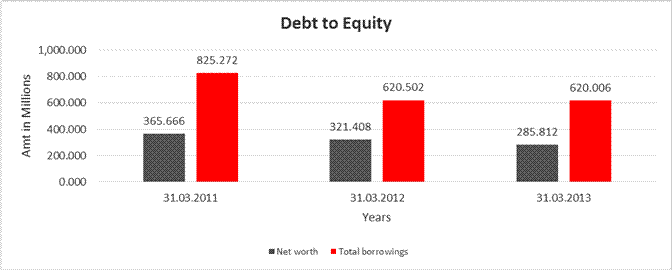
DEBT EQUITY RATIO
|
Particular |
31.03.2011 |
31.03.2012 |
31.03.2013 |
|
|
(Rs.
In Millions) |
(Rs.
In Millions) |
(Rs.
In Millions) |
|
Share Capital |
116.405 |
116.405 |
116.405 |
|
Reserves & Surplus |
249.261 |
205.003 |
169.407 |
|
Net
worth |
365.666 |
321.408 |
285.812 |
|
|
|
|
|
|
long-term borrowings |
475.641 |
369.175 |
320.236 |
|
Short term borrowings |
349.631 |
251.327 |
299.770 |
|
Total
borrowings |
825.272 |
620.502 |
620.006 |
|
Debt/Equity
ratio |
2.257 |
1.931 |
2.169 |
YEAR-ON-YEAR GROWTH
|
Year
on Year Growth |
31.03.2011 |
31.03.2012 |
31.03.2013 |
|
|
(Rs.
In Millions) |
(Rs.
In Millions) |
(Rs.
In Millions) |
|
Sales |
1494.322 |
1400.065 |
2093.866 |
|
|
|
(6.308) |
49.555 |

NET PROFIT MARGIN
|
Net
Profit Margin |
31.03.2011 |
31.03.2012 |
31.03.2013 |
|
|
(Rs.
In Millions) |
(Rs.
In Millions) |
(Rs.
In Millions) |
|
Sales |
1494.322 |
1400.065 |
2093.866 |
|
Profit |
38.096 |
(44.258) |
(35.596) |
|
|
2.55% |
(3.16%) |
(1.70%) |

LOCAL AGENCY FURTHER INFORMATION
|
Sr. No. |
Check List by Info
Agents |
Available in Report (Yes / No) |
|
1] |
Year of Establishment |
Yes |
|
2] |
Locality of the firm |
Yes |
|
3] |
Constitutions of the firm |
Yes |
|
4] |
Premises details |
No |
|
5] |
Type of Business |
Yes |
|
6] |
Line of Business |
Yes |
|
7] |
Promoter's background |
Yes |
|
8] |
No. of employees |
Yes |
|
9] |
Name of person contacted |
No |
|
10] |
Designation of contact person |
No |
|
11] |
Turnover of firm for last three years |
Yes |
|
12] |
Profitability for last three years |
Yes |
|
13] |
Reasons for variation <> 20% |
---------------------- |
|
14] |
Estimation for coming financial year |
No |
|
15] |
Capital in the business |
Yes |
|
16] |
Details of sister concerns |
Yes |
|
17] |
Major suppliers |
No |
|
18] |
Major customers |
No |
|
19] |
Payments terms |
No |
|
20] |
Export / Import details (if applicable) |
No |
|
21] |
Market information |
---------------------- |
|
22] |
Litigations that the firm / promoter involved in |
---------------------- |
|
23] |
Banking Details |
Yes |
|
24] |
Banking facility details |
Yes |
|
25] |
Conduct of the banking account |
---------------------- |
|
26] |
Buyer visit details |
---------------------- |
|
27] |
Financials, if provided |
Yes |
|
28] |
Incorporation details, if applicable |
Yes |
|
29] |
Last accounts filed at ROC |
Yes |
|
30] |
Major Shareholders, if available |
Yes |
|
31] |
Date of Birth of Proprietor/Partner/Director, if available |
Yes |
|
32] |
PAN of Proprietor/Partner/Director, if available |
No |
|
33] |
Voter ID No of Proprietor/Partner/Director, if available |
No |
|
34] |
External Agency Rating, if available |
Yes |
UNSECURED LOAN
Rs.
In Millions
|
Particular |
As
on 31.03.2013 |
As
on 31.03.2012 |
|
LONG - TERM BORROWINGS |
|
|
|
From public |
0.000 |
3.381 |
|
Total |
0.000 |
3.381 |
|
|
|
|
PERFORMANCE REVIEW
Last five years beginning from 2008-09 have been the most challenging period in the history of Indian Textile Industry, which faced multiplicity of adverse factors. Barring the year 2010-11 which reported exceptional recovery, rest of the period was mired in adversities arising from global meltdown, continued slowdown in advanced economies and weakening economic growth in India as well as other developing countries. Business related and political factors also took heavy toll on recovery of the textile industry which witnessed severe power constraints, rising interest rates, wide currency fluctuations, besides considerable mismatch in input/output costs resulting from faulty Government Polices relating to export of cotton and cotton yarn.
The first half of the financial year 2012-13 continued to be affected from some of the above adverse factors, but from the second half of the financial year there was distinct improvement. The Government had announced series of policy measures which included un-hindered export of cotton yarn, continuation of Textile Upgradation Fund Scheme and announcement of Foreign Trade Policy which had many positive features for the textile industry including incentive for incremental exports. Simultaneously demand for cotton yarn has also improved significantly. China became one of the major importers of cotton yarn from India.
The cotton crop at 34 Million bales was also satisfactory to take care of indigenous consumption and yet leave a sizable exportable surplus. The prices of raw cotton which in the beginning of the crop were lower have since settled down at reasonable levels. During the period, 8400 spindles were converted to compact technology, thereby taking the compact capacity to 34,896 spindles out of total capacity of 58,864 spindles.
In the year, the Company continued its thrust by undertaking outsourced yarn exports to improve both the top line and the margins. This resulted in the total revenue of the Company going upto Rs.2090.000 Millions as against Rs.1400.000 Millions in the previous year. In spite of increase in power tariff by 30% which resulted in higher power cost of Rs.36.400 Millions, the Company could report a cash profit of Rs.13.000 Millions against cash loss of Rs.1.700 Millions in the previous year. The operating profit went upto Rs.120.200 Millions from Rs.93.400 Millions. At net level, after charging depreciation of Rs.62.800 Millions, there is a loss of Rs.49.800 Millions as against loss of Rs.64.900 Millions in the previous year.
The Company is hopeful of maintaining the tempo of growth and achieve better results in the current financial year. The areas of concern are continued high cost of salaries and wages as compared to industry norms and ever rising cost of power in Kerala.
MANAGEMENT DISCUSSION
AND ANALYSIS
INDUSTRY STRUCTURE
AND DEVELOPMENTS
The importance of textile industry in the national economy is significant because of its contribution to economic growth, exports and employment. Exports of Textiles and Clothing during 2012-13 are estimated at around 33 billion USD, which works out to a share of about 11% in the total exports from the country of 301 billion USD. This sector currently employs about 35 million workers directly and 47 million workers in allied sectors like Agriculture.
The Indian Textile Industry which recovered handsomely in 2010-11 after two years of recession and adverse working, faced another challenging year in 2011-12 because of economic crisis in Eurozone aggravated by Cyprus problem and the weak recovery in US, resulting in demand recession. Broadly, the problems faced by the industry were as under:-
1) Global cotton shortage prevailed during 2010-11 and the same resulted in an unprecedented increase in global cotton prices from US $ 0.84 per lb in October 2010 to US $ 2.30 per lb in March 2011 on the New York Futures. The domestic cotton prices also increased from Rs.35000 per candy (356 kg) to Rs.62500 per candy for the Gujarat Shanker-6 variety. The situation was further aggravated due to premature announcement by Government, of cotton export of 55 lakhs bales in 45 days.
2) In the context, of losses and working capital crunch faced by the industry from April, 2011 onwards, the Confederation of Indian Textile Industry and other industry Associations requested Government for a Debt Restructuring package for the textile and clothing industry. The Industry’s request was for a moratorium of two years for repayment of principal amounts against terms loans and conversion of working capital eroded due to price fluctuation to Working Capital Term Loans (WCTL). It was also proposed that the package should relax the NPA norms to avoid asset reclassification or additional provisioning for repeatedly restructured loans. The proposal was accepted by the Finance Ministry which referred the matter to RBI for further action. However, RBI declined to accept the request for asset reclassification and therefore, a large number of mills which need repeated restructuring run the risk of turning into NPAs. This in effect would make the unit ineligible for TUFS assistance. CITI has represented to Government to relax NPA norms and allow TUFS benefits to such units.
3) The Ministry of Textiles has announced continuation of Technology Upgradation Fund Scheme during Twelfth Five Year Plan period envisaging total investments of Rs. 1510820.000 Millions with a cap of Rs. 400000.000 Millions for the spinning sector. The interest compensation rate under TUFS for spinning sector has been reduced to 4 per cent. The details of the Scheme are under formulation by Government and are expected to be announced soon.
4) In its fight against inflation, the RBI had increased the interest rates 13 times between March, 2010 and October, 2011. Moreover, the GDP growth declined to 6.9 per cent in 2011-12 and to 5 per cent in 2012-13. In spite of half a per cent reduction in interest rate in April, 2012, the interest rates are still higher. In the RBI Monetary Policy announced on 3rd May, 2013, RBI has reduced the interest rate further by quarter per cent. Despite these reductions, the average bank credit rate works out to 13 to 14 per cent, which is quite high and adds to the manufacturing cost and makes the cost of raising capital very high.
5) Extreme volatility in Forex market also lead to financial uncertainty. Rupee Exchange rate which was Rs. 51.86 to USD in April 2012 depreciated to Rs. 56 in June, 2012, again appreciated to Rs, 53.03 in October, 2012 and closed at Rs. 54.30 at year end.
6) Total production of Spun yarn and cotton yarn declined in 2011-12, in spite of the fact that cotton prices were more or less steady during the year. However, production in 2012-13 registered a robust growth of 10 per cent in respect of total spun yarn at 4800 million kgs and 14 per cent in respect of cotton yarn production at 3550 million kgs. The upward trend is expected to be continued in 2013-14. The improvement has come about on account of healthy growth both in the domestic and international markets.
7) Acute shortage of skilled and trained man-power is also affecting capacity utilization.
Spinning and Weaving
Capacities
Figures of world’s installed spinning and weaving capacities are available from International Textile Manufacturers Federation (ITMF) as of October, 2012. As at the end of 2011, world’s total spindleage was 250 million, with China having 120 million spindles, representing the share of 48 per cent and India was having 48 million spindles, representing share of about 19 per cent. As of March, 2013, however, India’s installed spindles have increased to 49.17 million, accounting for almost 20 per cent of the global spindleage. It is pertinent to mention that during the last four years, the spindleage in India has expanded by around 8 million. The capacity utilization of spinning in textile mills substantially increased to 83 per cent in 2011-12 as compared to 63 per cent in 2009-10 and 79 per cent in 2010-11.
Deducting 10 million spindles of closed mills, the number of operative spindles works out to around 39 million. The number of installed open-end rotors has marginally increased to 795 thousand in March, 2013 as compared to 771 thousand in March, 2012. It is pertinent to point out that expansion of spinning capacity has been significant both in the organized and small spinning sectors. To meet the rising domestic demand for cotton yarn from the downstream value chain and also to meet higher targets of exports of cotton yarn, the Twelfth Five Year Plan has envisaged investment of Rs.400000.000 Millions in the spinning sector.
A major chunk of spinning capacity expansion took place under the TUF Scheme, which was operative for a span of eight years from 1st April, 1999 to 31st March, 2007. Further, under the modified TUF Scheme operative from 1st April, 2007, investments during three years 2007-08 to 2009-10, increased considerably towards modernization and expansion of spinning capacity.
The Restructured TUF Scheme was announced by the Ministry of Textiles on 28th April, 2011. The Scheme was operative from 28th April, 2011 to 31st March, 2012, the terminal year of the Eleventh Five Year Plan. The major change in the Restructured Scheme was a reduction in the repayment period to seven years with two years moratorium as compared to earlier repayment period of ten years with two years moratorium
It is gratifying that Government has decided to continue TUF Scheme during the Twelfth Plan period, 2012-17.
The number of looms in the mill sector which remained stagnant at 71,000 for the three-year period, 2007-08 to 2009-10, declined to 66,000 during 2011-12 and 2012-13. However, the weaving capacity in the powerloom sector has increased from 22.46 lakh looms in 2009-10 to almost 23.33 lakh looms as of December, 2012.
Production of Yarn
The total production of spun yarn which was 4193 million kgs in 2009-10 expanded to 4713 million kgs in 2010-11, showing a creditable growth of over 12 per cent. However, total production of spun yarn in 2011-12 was lower at 4373 million kgs exhibiting a decline of 7 per cent. For the year 2012-13, total production of spun yarn is provisionally placed at 4842 million kgs showing a robust growth of 11 per cent. Similarly, production of cotton yarn also escalated from 3079 million kgs in 2009-10 to 3490 million kgs in 2010-11. For the year 2011-12, production of cotton yarn was 3126 million kgs. Production of cotton yarn in 2012-13 is provisionally placed at 3562 million kgs and for 2013-14 it is projected at 4000 million kgs.
Exports of Cotton
Yarn
In pursuance of National Fibre Policy, Government set up in September 2010, Cotton Yarn Advisory Board (CYAB) to advise the Government on matters pertaining to production, consumption and exports of cotton yarn.
Exports of cotton yarn in 2011-12 are estimated at 750 million kgs valued at 2.99 billion USD as against exports of 694 million kgs valued at 2.7 billion USD in 2010-11. This indicates that unit value declined in 2011-12 as compared to 2010-11. This is mainly due to depressed prices in international markets, intensification of competition and a change in the pattern of trade.
China has been increasing its sourcing of cotton yarn from all over the world in view of the high value cotton stock held by it and to meet ever increasing demand for yarn for its domestic knitting and weaving industry. Import of cotton yarn in China increased by 69 per cent from all sources - 1526 million kgs in 2012 against 903 million kgs in 2011. As against this, import of cotton yarn from India in the year 2012 increased by 124 per cent. India’s exports of cotton yarn in 2012 were 326 million kgs as against 111 million kgs in 2011. The share of India’s exports of cotton yarn to China accounts for almost 33 per cent of India’s total exports of cotton yarn. Thus, India has emerged as the leading exporter of cotton yarn to China. Increasing imports of cotton yarn by China from India will give a tremendous boost to the Indian spinning industry.
As per deliberations at the Cotton Yarn Advisory Board meetings, the Cotton Yarn Balance Sheets for 2012-13 and 2013-14 were drawn up in terms of which exportable surplus were arrived at 1000 million kgs. for 2012-13 and 1150 million kgs for 2013-14. The figure of exports as per export contract registration during 2012-13 is 1067 million kgs.
Upto 2009-10 exports of cotton yarn were operating smoothly and were in the range of 20 to 22 per cent of the production of cotton yarn. The slipshod manner in which Government handled exports of cotton yarn earlier has done immense harm to the textile industry. However, since March, 2012, Government has permitted free exports of cotton yarn, subject, of course, to registration of contracts with DGFT.
Cotton Scenario
For the cotton season 2010-11, Cotton Advisory Board had estimated area under cotton at 112.35 lakh hectares and crop at 339 lakh bales. The per hectare yield for the season increased to 513 kgs as against of 503 kgs achieved in 2009-10. For the cotton season 2011-12, Cotton Advisory Board has estimated the area at 121.78 lakh hectares and a crop of 355 lakh bales. Per hectare yield in the cotton season 2011-12 works out lower at 496 kgs.
Although the cotton crop during the 2011-12 season was quite high, the Indian textile industry did not derive the advantage of home-grown cotton on account of unprecedently higher quantum of exports of raw cotton. While the domestic industry was denied better quality cotton at competitive prices, our competitors like China and other South East Asian countries got the advantage of best quality Indian cottons at cheaper prices.
For the cotton year 2011-12, CAB had earlier arrived at the figure of 55 lakh bales of cotton as exportable surplus. However, DGFT subsequently allowed exports of raw cotton upto 95 lakh bales, subject to registration of contracts. The total quantity registered for exports was 120 lakh bales. In March, 2012 DGFT banned exports of cotton once it reached the figure of 95 lakh bales. However, due to persistent pressure from the trading community, the Group of Ministers decided that total quantity of registered contracts at 120 lakh bales be allowed for exports. However, actual exports were 129.59 lakh bales.
For the cotton season 2012-13, the CAB has estimated the crop at 340 lakh bales and exports at 81 lakh bales. Already, however, cotton export contracts registration has crossed 90 lakh bales.
Cotton prices in the current season were almost steady upto January, 2013. Since February 2013, however, cotton prices have exhibited a rising trend. CCI / NAFED covered cotton from farmers when prices went down below the Minimum Support Prices, mainly in Andhra Pradesh, where they covered 2.5 million bales. By not releasing such cotton to the industry, CCI / NAFED has added to the price spiral. Some of the ginners are also holding back their stocks in the hope of earning higher prices. This is affecting the working of textile industry and therefore Confederation of Indian Textile Industry (CITI) and other industry Associations have represented at the highest level to advise CCI / NAFED to offer cotton to the industry at reasonable prices.
While on this, it is significant to note that Cotlook ‘A’ Index, representing international prices was 84.40 cents per lb in August, 2012 which has since risen to 93.20 as of 30th April, 2013. Cotlook ‘A’ Index has also shown a rising trend from February, 2013 onwards.
Global organic cotton production in 2011 dropped by 37 per cent to 151,079 tons. India, Syria, China, Turkey and the United States were the top five producers in that year. Production in India declined by 48 per cent from 195,412 tons to 102,452 tons on account of regulatory controls exercised by Agricultural and Processed Food Products Export Development Authority (APEDA). Prospects for 2011-12 cotton season indicate that cotton area will decline further in 2011-12 mainly in India. Organic cotton production is expected to reach 143,600 tons in 2011-12. International Cotton Advisory Committee (ICAC) anticipates that the production will start gaining momentum from 2012-13 onwards.
While importance of India has a major supplier is declining, that of Central Asian countries of Kyrgyzstan and Tajikistan is emerging as dominant suppliers. The average yield in respect of organic cotton is much lower than the conventional cotton. For instance, the overall average yield of countries producing organic cotton was 783 kg/ ha whereas yield of organic cotton was barely 466 kg / ha.
With Government’s prediction of normal monsoon for the coming season and other favourable factors like higher cotton exports in the current season, farmers will find it attractive to increase area under cotton cultivation. Other encouraging factors are: growing awareness among farmers for adoption of better technology and augmented supply of a good quality seed. Undoubtedly, the performance of textile industry hinges largely on adequate availability of quality cotton. The industry has a potential to absorb larger cotton crop with the massive expansion of spinning capacity at the rate of 3 million spindles per year during Twelfth Plan period. However, Government should exercise abundant caution in deciding the policy for exports of raw cotton, keeping overall national interest in mind.
According to ICAC, global cotton production, in the season 2011-12 (August -July) was 27.79 million tons and consumption of 22.10 million tons, resulting in ending stocks of 15.27 million tons. This led to decline in cotton prices during 2012-13 by 5 per cent.
For the cotton season 2012-13, global production is estimated at 26.34 million tons, lower by 1.45 million tons. Consumption, on the other hand, is expected to increase to 23.71 million tons, a rise of 1.61 million tons. The ending stocks are expected to rise to 17.90 million tons, as against 15.27 million tons in 2011-12.
ICAC’s forecast for global cotton production for the cotton season 2013-14 is lower at 24.61 million tons, consumption is forecast at 24.25 million tons.
Thus Cotlook ‘A’ Index for the cotton season 2011-12 which was 100 cents per pound has declined to 88 cents per pound in 2012-13. However, for the cotton season 2013-14 the price forecast is 122 cents per pound. These price forecasts are based on the assumption that the Chinese Government will continue its current reserve policy. As it is, China has built up a massive national cotton reserve, ensuring raw material security to its textile industry. China, holding 50 per cent of global cotton stocks, is creating significant uncertainty for the global cotton market.
OUTLOOK
Global exports of textiles and clothing in 2011 were 706 billion USD, as per WTO figures. China’s share in the global trade in textiles / clothing was 35 per cent and that of India a barely 4 per cent. With the rising costs in China and its deliberate shift in favour of domestic consumption, India has tremendous scope for boosting its share to a more respectable figure. Further, by 2020, world exports of textiles / clothing are projected to increase to 1,000 billion USD. The expectation is that India’s exports would rise from 30 billion USD to 80 billion USD by 2020. This will provide immense potential to India for enhancing its exports.
On the domestic front also India is poised for a healthy growth, in view of rising population, sustained increase in per capita income and disposable surplus, favourable demographic profile and changing lifestyle. Besides, Government of India is becoming increasingly sensitive to the needs of the textile industry and taking ameliorative measures in regard to debt restructuring scheme, extension of TUFS and TMC in the Twelfth Five Year Plan etc. Another area is rapid growth of technical textiles for which Government has been providing encouraging support.
The Ministry of Commerce has announced exporter-friendly measures in the Foreign Trade Policy. Favourable policy changes have been made in Focus Product Scheme, Market Product Scheme, Market Linked Focus Product Scheme, Incremental Exports Incentivisation Scheme, Liberalized EPCG Scheme, etc. All these measures will boost exports of textiles and clothing.
Above all, India is in a unique position of having an integrated textile set-up endowed with presence across all the textile value chain from fibres to fashion garments.
All these favourable factors indicate extremely optimistic and positive future for the healthy growth of the Indian textile industry.
INDEX OF CHARGES
|
S.No. |
Charge ID |
Date of Charge
Creation/Modification |
Charge amount
secured |
Charge Holder |
Address |
Service Request
Number (SRN) |
|
1 |
10388449 |
20/03/2013 * |
75,000,000.00 |
CENTRAL BANK OF INDIA |
MARKET ROAD, ALWAYE, COCHIN, KERALA - 683101, INDIA |
B71954994 |
|
2 |
10337549 |
20/03/2013 * |
35,000,000.00 |
EXPORT-IMPORT BANK OF INDIA |
FLOOR 21, CENTER ONE BUILDING, WORLD TRADE CENTER, CUFFE PARADE, MUMBAI, MAHARASHTRA - 400005, INDIA |
B72812563 |
|
3 |
10142865 |
13/03/2012 * |
150,000,000.00 |
CENTRAL BANK OF INDIA |
MARKET ROAD, ALUVA, COCHIN, KERALA - 683101, INDIA |
B35423540 |
|
4 |
10106252 |
13/03/2012 * |
1,073,100,000.00 |
CENTRAL BANK OF INDIA |
MARKET ROAD, ALWAYE, COCHIN, KERALA - 683101, INDIA |
B35424175 |
|
5 |
10043498 |
27/01/2014 * |
271,600,000.00 |
AXIS BANK LIMITED |
NO.41/419, GROUND FLOOR, CHICAGO PLAZA, RAJAJI ROAD, ERNAKULAM, KERALA - 682035, INDIA |
B94848272 |
|
6 |
10050934 |
17/11/2009 * |
72,251,510.00 |
EXPORT-IMPORT BANK OF INDIA |
FLOOR 21 CENTER ONE BUILDING, WORLD TRADE CENTER, CUFFEE PARADE, MUMBAI, MAHARASHTRA - 400005, INDIA |
A74750324 |
|
7 |
10050935 |
17/11/2009 * |
81,568,750.00 |
EXPORT-IMPORT BANK OF INDIA |
FLOOR 21 CENTER ONE BUILDING, WORLD TRADE CENTER, CUFFEE PARADE, MUMBAI, MAHARASHTRA - 400005, INDIA |
A74750233 |
|
8 |
10039967 |
13/03/2012 * |
120,000,000.00 |
BANK OF INDIA |
ERNAKULAM MID CORPORATE BRANCH, MANAVALAN BUILDING, SUBHASH CHANDRA BOSE ROAD, PONNURUNNI, COCHIN, KERALA - 682016, INDIA |
B36416717 |
|
9 |
10027468 |
13/03/2012 * |
55,000,000.00 |
STATE BANK OF TRAVANCORE |
OVERSEAS BRANCH, JJ BUILDING, CIVIL LINES ROAD, PALARIVATTOM, KOCHI, KERALA - 682025, INDIA |
B35292358 |
|
10 |
10008948 |
30/06/2009 * |
320,000,000.00 |
STATE BANK OF INDIA |
COMMERCIAL BRANCH FIRST FLOOR, VANKARATH TOWERS PADIVATTOM, KOCHI, KERALA - 682024, INDIA |
A67215897 |
|
11 |
10008946 |
17/11/2012 * |
697,000,000.00 |
CENTRAL BANK OF INDIA |
MARKET ROAD, ALWAYE, COCHIN, KERALA - 683101, INDIA |
B62769054 |
|
12 |
10008943 |
13/03/2012 * |
40,000,000.00 |
CENTRAL BANK OF INDIA |
MARKET ROAD, ALUVA, COCHIN, KERALA - 683101, INDIA |
B35422872 |
* Date of charge modification
Un-audited financial results for the Quarter and Nine Months Ended on 31st December, 2013
Rs in Millions
|
Sr. No |
Particulars |
Standalone |
||
|
Unaudited |
Unaudited |
Unaudited |
||
|
Quarter Ended |
Year to date |
|||
|
|
|
31.12.2013 |
30.09.2013 |
31.12.2013 |
|
1 |
Income from operations |
|
|
|
|
|
(a) Net
Sales/Income from Operations (Net of excise duty) |
697.400 |
859.000 |
2177.900 |
|
|
(b) Other Operating Income |
14.700 |
21.000 |
47.800 |
|
|
Total income from operations (net) (a) + (b) |
712.100 |
880.000 |
2225.700 |
|
2 |
Expenses |
|
|
|
|
|
(a) Cost of materials consumed |
306.800 |
243.000 |
864.400 |
|
|
(b) Purchases of stock-in-trade |
152.900 |
439.000 |
743.300 |
|
|
(c)
Changes in inventories of finished goods, work-in-progress and stock-in-trade |
44.100 |
(49.500) |
(42.800) |
|
|
(d) Employee benefits expense |
59.000 |
58.600 |
172.800 |
|
|
(e) Depreciation and amortisation expense |
15.600 |
15.500 |
46.200 |
|
|
(f) Power and Fuel |
40.500 |
41.500 |
124.100 |
|
|
(g) Other expenditure |
45.300 |
86.500 |
192.600 |
|
|
Total expenses |
664.200 |
834.600 |
2100.600 |
|
3 |
Profit before interest,
Depreciation, Other Income, and Tax (PBIDTA) |
63.500 |
60.900 |
171.300 |
|
4. |
Profit / (Loss) from
operations before other income, finance costs and exceptional items(1-2) |
47.900 |
45.400 |
125.100 |
|
5 |
Other Income |
0.700 |
1.300 |
3.000 |
|
6 |
Profit
/ (Loss) from ordinary activities before finance costs and exceptional
items(3 + 4) |
48.600 |
46.700 |
128.100 |
|
7 |
Finance costs |
31.300 |
41.200 |
104.800 |
|
8 |
Profit /
(Loss) from ordinary activities after finance costs but before exceptional
items(S - 6) |
32.900 |
21.000 |
69.500 |
|
9 |
Profit
/ Loss from ordinary activities after finance cost |
17.300 |
5.500 |
23.300 |
|
10 |
Exceptional items |
-- |
-- |
-- |
|
11 |
Profit
/ (Loss) from ordinary activities before tax (7 + 8) |
17.300 |
5.500 |
23.300 |
|
12 |
Tax Expense |
|
|
|
|
|
Tax Exposes |
3.500 |
1.100 |
4.700 |
|
|
MAT Credit Entitlement |
(3.500) |
(1.100) |
(4.700) |
|
|
Deferred Tax Liability / (Reversal) |
7.600 |
2.200 |
10.700 |
|
13 |
Net
Profit / (Loss) from ordinary activities after tax (9-10) |
9.700 |
3.300 |
12.600 |
|
14 |
Extraordinary Items (net of tax expense) |
-- |
-- |
-- |
|
15 |
Net Profit / (Loss) for the period (11 -12) |
9.700 |
3.300 |
12.600 |
|
16 |
Paid up equity share capital (Face Value of Rs10/-each) |
116.400 |
116.400 |
116.400 |
|
17 |
Reserve excluding Revaluation
Reserves as per balance sheet of previous accounting year |
---- |
|
|
|
18 |
Earnings per share (EPS) Basic / Diluted (of Rs.
10/- each) (not annualised): |
0.83 |
0.28 |
1.08 |
|
|
|
|
|
|
|
A 1 |
PARTICULARS OF
SHAREHOLDING |
|
|
|
|
|
Public
shareholding |
|
|
|
|
|
-
Number of shares |
4390040 |
4390040 |
4390040 |
|
|
- Percentage of
shareholding |
37.71 |
37.71 |
37.71 |
|
2 |
Promoters and Promoter
Group Shareholding |
|
|
|
|
|
a) Pledged / Encumbered |
|
|
|
|
|
- Number of shares |
NIL |
NIL |
NIL |
|
|
- Percentage of shares
(as a % of the total shareholding of promoter and promoter group) |
NA |
NA |
NA |
|
|
-
Percentage of shares (as a % of the total share capital of the company) |
NA |
NA |
NA |
|
|
b) Non-encumbered |
|
|
|
|
|
- Number of shares |
7250438 |
7250438 |
7250438 |
|
|
-
Percentage of shares (as a % of the total shareholding of promoter and
promoter group) |
100 |
100 |
100 |
|
|
- Percentage
of shares (as a % of the total share capital of the company) |
62.29 |
62.29 |
62.29 |
|
|
|
|
|
|
|
B |
INVESTOR COMPLAINTS |
|
|
|
|
|
Pending
at the beginning of the quarter |
NIL |
|
|
|
|
Received
during the quarter |
2 |
|
|
|
|
Disposed
of during the quarter |
2 |
|
|
|
|
Remaining
unresolved at the end of the quarter |
NIL |
|
|
Note :
1. The above audited results were reviewed by the Audit Committee and approved
by the Board of Directors at their meeting held on 13.02.2014. The statutory
Auditors have carried out a Limited review of these results pursuant to clause
41 to the Listing Agreement.
2. The company is engaged in Yarn business and
as such has only Single reportable Business Segment i.e. “Yarn Segment” in
terms of requirements of Accounting Standard 17.
3. Previous period / Year’s figures have been
regrouped wherever necessary.
FIXED ASSETS
·
Land-Freehold
·
Buildings
·
Plant and Machinery
·
Electrical Installations
·
Furniture and Office Equipments
·
Vehicles
CMT REPORT (Corruption, Money Laundering & Terrorism]
The Public Notice information has been collected from various sources
including but not limited to: The Courts,
1] INFORMATION ON
DESIGNATED PARTY
No exist designating subject or any of its beneficial owners,
controlling shareholders or senior officers as terrorist or terrorist
organization or whom notice had been received that all financial transactions
involving their assets have been blocked or convicted, found guilty or against
whom a judgement or order had been entered in a proceedings for violating
money-laundering, anti-corruption or bribery or international economic or anti-terrorism
sanction laws or whose assets were seized, blocked, frozen or ordered forfeited
for violation of money laundering or international anti-terrorism laws.
2] Court Declaration :
No records exist to suggest that subject is
or was the subject of any formal or informal allegations, prosecutions or other
official proceeding for making any prohibited payments or other improper
payments to governmen officials for engaging in prohibited transactions or with
designated parties.
3] Asset Declaration :
No records exist to suggest that the property or assets of the subject
are derived from criminal conduct or a prohibited transaction.
4] Record on Financial
Crime :
Charges or conviction
registered against subject: None
5] Records on Violation of
Anti-Corruption Laws :
Charges or
investigation registered against subject: None
6] Records on Int’l
Anti-Money Laundering Laws/Standards :
Charges or
investigation registered against subject: None
7] Criminal Records
No available
information exist that suggest that subject or any of its principals have been
formally charged or convicted by a competent governmental authority for any
financial crime or under any formal investigation by a competent government
authority for any violation of anti-corruption laws or international anti-money
laundering laws or standard.
8] Affiliation with
Government :
No record
exists to suggest that any director or indirect owners, controlling
shareholders, director, officer or employee of the company is a government
official or a family member or close business associate of a Government
official.
9] Compensation Package :
Our market
survey revealed that the amount of compensation sought by the subject is fair
and reasonable and comparable to compensation paid to others for similar
services.
10] Press Report :
No press reports / filings exists on
the subject.
CORPORATE GOVERNANCE
MIRA INFORM as part of its Due Diligence do provide comments on
Corporate Governance to identify management and governance. These factors often
have been predictive and in some cases have created vulnerabilities to credit
deterioration.
Our Governance Assessment focuses principally on the interactions
between a company’s management, its Board of Directors, Shareholders and other
financial stakeholders.
CONTRAVENTION
Subject is not known to have contravened any existing local laws,
regulations or policies that prohibit, restrict or otherwise affect the terms
and conditions that could be included in the agreement with the subject.
FOREIGN EXCHANGE RATES
|
Currency |
Unit
|
Indian Rupees |
|
US Dollar |
1 |
Rs.62.07 |
|
|
1 |
Rs.103.61 |
|
Euro |
1 |
Rs.85.03 |
INFORMATION DETAILS
|
Report Prepared
by : |
NTH |
SCORE & RATING EXPLANATIONS
|
SCORE FACTORS |
RANGE |
POINTS |
|
HISTORY |
1~10 |
3 |
|
PAID-UP CAPITAL |
1~10 |
3 |
|
OPERATING SCALE |
1~10 |
3 |
|
FINANCIAL CONDITION |
|
|
|
--BUSINESS SCALE |
1~10 |
3 |
|
--PROFITABILIRY |
1~10 |
2 |
|
--LIQUIDITY |
1~10 |
3 |
|
--LEVERAGE |
1~10 |
3 |
|
--RESERVES |
1~10 |
4 |
|
--CREDIT LINES |
1~10 |
3 |
|
--MARGINS |
-5~5 |
-- |
|
DEMERIT POINTS |
|
|
|
--BANK CHARGES |
YES/NO |
YES |
|
--LITIGATION |
YES/NO |
NO |
|
--OTHER ADVERSE INFORMATION |
YES/NO |
NO |
|
MERIT POINTS |
|
|
|
--SOLE DISTRIBUTORSHIP |
YES/NO |
NO |
|
--EXPORT ACTIVITIES |
YES/NO |
NO |
|
--AFFILIATION |
YES/NO |
YES |
|
--LISTED |
YES/NO |
YES |
|
--OTHER MERIT FACTORS |
YES/NO |
YES |
|
DEFAULTER |
|
|
|
--RBI |
YES/NO |
NO |
|
--EPF |
YES/NO |
NO |
|
TOTAL |
|
27 |
This score serves as a reference to assess SC’s credit risk
and to set the amount of credit to be extended. It is calculated from a
composite of weighted scores obtained from each of the major sections of this
report. The assessed factors and their relative weights (as indicated through
%) are as follows:
Financial
condition (40%) Ownership
background (20%) Payment
record (10%)
Credit history
(10%) Market trend
(10%) Operational
size (10%)
RATING EXPLANATIONS
|
RATING |
STATUS |
PROPOSED CREDIT LINE |
|
|
>86 |
Aaa |
Possesses an extremely sound financial base with the strongest
capability for timely payment of interest and principal sums |
Unlimited |
|
71-85 |
Aa |
Possesses adequate working capital. No caution needed for credit
transaction. It has above average (strong) capability for payment of interest
and principal sums |
Large |
|
56-70 |
A |
Financial & operational base are regarded healthy. General unfavourable
factors will not cause fatal effect. Satisfactory capability for payment of
interest and principal sums |
Fairly Large |
|
41-55 |
Ba |
Overall operation is considered normal. Capable to meet normal
commitments. |
Satisfactory |
|
26-40 |
B |
Capability to overcome financial difficulties seems comparatively
below average. |
Small |
|
11-25 |
Ca |
Adverse factors are apparent. Repayment of interest and principal sums
in default or expected to be in default upon maturity |
Limited with full
security |
|
<10 |
C |
Absolute credit risk exists. Caution needed to be exercised |
Credit not
recommended |
|
-- |
NB |
New Business |
-- |
This report is issued at your request without any
risk and responsibility on the part of MIRA INFORM PRIVATE LIMITED (MIPL) or
its officials.