MIRA INFORM REPORT
|
Report No. : |
352216 |
|
Report Date : |
01.12.2015 |
IDENTIFICATION DETAILS
|
Name : |
SAMUELS JEWELERS, INC. |
|
|
|
|
Registered Office : |
2914 Montopolis Drive, Ste 200, Austin, TX 78741 – USA |
|
|
|
|
Country : |
United
States |
|
|
|
|
Date of Incorporation : |
1891 |
|
|
|
|
Legal Form : |
Corporation – Profit |
|
|
|
|
Line of Business : |
Subject operates 107 stores throughout the United States under the
Samuels Jewelers, Samuels Diamonds, Rogers Jewelers, Andrews Jewelers and
Schubach Jewelers banners, as well as online at SamuelsJewelers.com and
Rogers-Jewelers.com. |
|
|
|
|
No. of Employees : |
860 |
RATING & COMMENTS
|
MIRA’s Rating : |
Ba |
|
RATING |
STATUS |
PROPOSED CREDIT LINE |
|
|
41-55 |
Ba |
Overall operation is considered normal. Capable to meet normal
commitments. |
Satisfactory |
|
Status : |
Satisfactory |
|
Payment Behaviour : |
Slow but correct |
|
Litigation : |
Clear |
NOTES:
Any query related to this report can be made
on e-mail: infodept@mirainform.com
while quoting report number, name and date.
ECGC Country Risk Classification List – March 31, 2015
|
Country Name |
Previous Rating (31.12.2014) |
Current Rating (31.03.2015) |
|
United States |
A1 |
A1 |
|
Risk Category |
ECGC
Classification |
|
Insignificant |
A1 |
|
Low |
A2 |
|
Moderate |
B1 |
|
High |
B2 |
|
Very High |
C1 |
|
Restricted |
C2 |
|
Off-credit |
D |
UNITED STATES - ECONOMIC OVERVIEW
The US has the most technologically powerful economy in the world, with a per capita GDP of $54,800. US firms are at or near the forefront in technological advances, especially in computers, pharmaceuticals, and medical, aerospace, and military equipment; however, their advantage has narrowed since the end of World War II. Based on a comparison of GDP measured at Purchasing Power Parity conversion rates, the US economy in 2014, having stood as the largest in the world for more than a century, slipped into second place behind China, which has more than tripled the US growth rate for each year of the past four decades.
In the US, private individuals and business firms make most of the decisions, and the federal and state governments buy needed goods and services predominantly in the private marketplace. US business firms enjoy greater flexibility than their counterparts in Western Europe and Japan in decisions to expand capital plant, to lay off surplus workers, and to develop new products. At the same time, they face higher barriers to enter their rivals' home markets than foreign firms face entering US markets.
Long-term problems for the US include stagnation of wages for lower-income families, inadequate investment in deteriorating infrastructure, rapidly rising medical and pension costs of an aging population, energy shortages, and sizable current account and budget deficits.
The onrush of technology has been a driving factor in the gradual development of a "two-tier" labor market in which those at the bottom lack the education and the professional/technical skills of those at the top and, more and more, fail to get comparable pay raises, health insurance coverage, and other benefits. But the globalization of trade, and especially the rise of low-wage producers such as China, has put additional downward pressure on wages and upward pressure on the return to capital. Since 1975, practically all the gains in household income have gone to the top 20% of households. Since 1996, dividends and capital gains have grown faster than wages or any other category of after-tax income.
Imported oil accounts for nearly 55% of US consumption and oil has a major impact on the overall health of the economy. Crude oil prices doubled between 2001 and 2006, the year home prices peaked; higher gasoline prices ate into consumers' budgets and many individuals fell behind in their mortgage payments. Oil prices climbed another 50% between 2006 and 2008, and bank foreclosures more than doubled in the same period. Besides dampening the housing market, soaring oil prices caused a drop in the value of the dollar and a deterioration in the US merchandise trade deficit, which peaked at $840 billion in 2008.
The sub-prime mortgage crisis, falling home prices, investment bank failures, tight credit, and the global economic downturn pushed the United States into a recession by mid-2008. GDP contracted until the third quarter of 2009, making this the deepest and longest downturn since the Great Depression. To help stabilize financial markets, the US Congress established a $700 billion Troubled Asset Relief Program (TARP) in October 2008. The government used some of these funds to purchase equity in US banks and industrial corporations, much of which had been returned to the government by early 2011. In January 2009 the US Congress passed and President Barack OBAMA signed a bill providing an additional $787 billion fiscal stimulus to be used over 10 years - two-thirds on additional spending and one-third on tax cuts - to create jobs and to help the economy recover. In 2010 and 2011, the federal budget deficit reached nearly 9% of GDP. In 2012, the federal government reduced the growth of spending and the deficit shrank to 7.6% of GDP.
Wars in Iraq and Afghanistan required major shifts in national resources from civilian to military purposes and contributed to the growth of the budget deficit and public debt. Through 2014, the direct costs of the wars totaled more than $1.5 trillion, according to US Government figures. US revenues from taxes and other sources are lower, as a percentage of GDP, than those of most other countries.
In March 2010, President OBAMA signed into law the Patient Protection and Affordable Care Act, a health insurance reform that was designed to extend coverage to an additional 32 million American citizens by 2016, through private health insurance for the general population and Medicaid for the impoverished. Total spending on health care - public plus private - rose from 9.0% of GDP in 1980 to 17.9% in 2010.
In July 2010, the president signed the DODD-FRANK Wall Street Reform and Consumer Protection Act, a law designed to promote financial stability by protecting consumers from financial abuses, ending taxpayer bailouts of financial firms, dealing with troubled banks that are "too big to fail," and improving accountability and transparency in the financial system - in particular, by requiring certain financial derivatives to be traded in markets that are subject to government regulation and oversight.
In December 2012, the Federal Reserve Board (Fed) announced plans to purchase $85 billion per month of mortgage-backed and Treasury securities in an effort to hold down long-term interest rates, and to keep short term rates near zero until unemployment dropped below 6.5% or inflation rose above 2.5%. In late 2013, the Fed announced that it would begin scaling back long-term bond purchases to $75 billion per month in January 2014 and reduce them further as conditions warranted; the Fed ended the purchases during the summer of 2014. In 2014, the unemployment rate dropped to 6.2%, and continued to fall to 5.5% by mid-2015, the lowest rate of joblessness since before the global recession began; inflation stood at 1.7%, and public debt as a share of GDP continued to decline, following several years of increase.
|
Source
: CIA |
Company
Name & address
Company name: SAMUELS JEWELERS, INC.
Address: 2914 Montopolis Drive,
Ste 200, Austin, TX 78741 - USA
Telephone: +1
512-369-1400
Fax: +1 512-369-1500
Website: www.samueljewelers.com
Corporate ID#: 2929362
State: Delaware
Judicial form: Corporation – Profit
Date incorporated: 08-20-1998
Date founded: 1891
Stock: -
Value: -
Name of manager: AJAY
RAI
ACTIVITIES & OPERATIONS
Business:
Samuels Jewelers operates 107 stores throughout the United States under
the Samuels Jewelers, Samuels Diamonds, Rogers Jewelers, Andrews Jewelers and
Schubach Jewelers banners, as well as online at SamuelsJewelers.com and
Rogers-Jewelers.com.
Office
of the Foreign Assets Control (OFAC):
The company is not listed on the OFAC list.
The Specially Designated Nationals (SDN) List is a publication of OFAC
which lists individuals and organizations with whom United States citizens and
permanent residents are prohibited from doing business.
Suppliers include:
Gitanjali Gems Ltd.
Mumbai, India
EIN: 95-3746316
Staff: 860
Operations & branches:
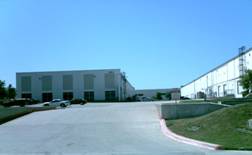
At the headquarters, we
find the corporate office and showroom, on lease.
SHAREHOLDERS
& MANAGERS
Shareholders:
Since January 2006, the owner is:
GITANJALI GEMS LTD 100%
Mumbai - India
Gitanjali Gems Limited engages in the design,
manufacture, distribution, and retail of diamonds and jewellery in India and
internationally.
Its activities include manufacture, sale, and
export of cut and polished diamonds; manufacture, sale, and export of plain
gold and diamond studded jewellery; and manufacture, purchase, and sale of
jewellery.
The company offers gold, silver, platinum, and
stainless steel jewllery; and jewllery studded with diamond and other gems
under the brands of GILI, Nakshatra, Asmi, Sangini, D’damas, Maya Gold, etc.
It also provides fashion accessories, jewellery,
watches, and silver ware under the brands of Vivaaha, Glitterati, Diya, Stefen
Hafner, Shuddhi, Nizam, Lucera, Revv, Rivaaz, Giantti, World of Solitaire, Me
Solitaire, World of Silver, Bezel, Morellato, Amore, Gdivas, etc. The company
sells diamonds and jewellery to merchant jewellers and retail chains.
It operates 4000 points of sale, including 233
stores, 577 shop-in-shop format stores, and 319 franchise stores.
Gitanjali Gems Limited was founded in 1966 and is
based in Mumbai, India.
The Company is publicly
trade in India.
Management:
Nehal MODI, President, Director and CEO
He is also the President and CEO of DIAMLINK JEWELRY INC. incorporated
in New York State of 09-22-2000, under ID# 2555689.
He is also the CEO of GITANJALI USA, INC. incorporated in New York State
on
12-19-2006 under ID# 3451285.
Mr. Modi has been a Non-Executive Director at
Gitanjali Gems Ltd. since October 29, 2009.
He holds a BA in Finance and Marketing from Boston
University.
Ajai RAI is Deputy CEO.
Graduate from Symbiosis Institute of Management, India, in 2008 with a
MBA in Sales and Marketing.
Robert HERMAN is the CFO.
Subsidiaries
And partnership: None
FINANCIALS
In United States, privately
held corporations are not required to publish any financials.
On a direct call, nobody
accepted to answer our questions.
We sent a fax but no answer
received at this time.
However, sales estimate for
year 2014 is in excess of USD 100,000,000=
The business is profitable.
Banks: Sovereign Bank
600 W 5th St, Austin,
TX 78701
Ph: +1 512-482-6000
LEGAL
FILINGS
Legal filings & complaints:
As of today, there is no legal filing pending with the Courts.
Secured debts summary (UCC):
None