MIRA INFORM REPORT
|
Report No. : |
307225 |
|
Report Date : |
10.02.2015 |
IDENTIFICATION DETAILS
|
Name : |
FIRESTAR DIAMOND, INC. |
|
|
|
|
Formerly Known As : |
FIRESTONE INC. |
|
|
|
|
Registered Office : |
154 West 14th Street, New York, NY 10011 |
|
|
|
|
Country : |
United States |
|
|
|
|
Date of Incorporation : |
04.02.2004 |
|
|
|
|
Legal Form : |
Corporation – Profit |
|
|
|
|
Line of Business : |
Importer and Distributor of Diamonds and Fine Jewelry. |
|
|
|
|
No. of Employees : |
30 |
RATING & COMMENTS
|
MIRA’s Rating : |
B |
|
RATING |
STATUS |
PROPOSED CREDIT LINE |
|
|
26-40 |
B |
Capability to overcome financial difficulties seems comparatively
below average. |
Small |
|
Status : |
Moderate |
|
|
|
|
Payment Behaviour : |
Slow but correct |
|
|
|
|
Litigation : |
Clear |
NOTES:
Any query related to this report can be made
on e-mail: infodept@mirainform.com
while quoting report number, name and date.
ECGC Country Risk Classification List – December 31, 2014
|
Country Name |
Previous Rating (30.09.2014) |
Current Rating (31.12.2014) |
|
United States |
A1 |
A1 |
|
Risk Category |
ECGC
Classification |
|
Insignificant |
A1 |
|
Low |
A2 |
|
Moderate |
B1 |
|
High |
B2 |
|
Very High |
C1 |
|
Restricted |
C2 |
|
Off-credit |
D |
UNITED STATES - ECONOMIC OVERVIEW
The US has
the largest and most technologically powerful economy in the world, with a per
capita GDP of $49,800. In this market-oriented economy, private individuals and
business firms make most of the decisions, and the federal and state
governments buy needed goods and services predominantly in the private
marketplace. US business firms enjoy greater flexibility than their
counterparts in Western Europe and Japan in decisions to expand capital plant,
to lay off surplus workers, and to develop new products. At the same time, they
face higher barriers to enter their rivals' home markets than foreign firms
face entering US markets. US firms are at or near the forefront in
technological advances, especially in computers and in medical, aerospace, and
military equipment; their advantage has narrowed since the end of World War II.
The onrush of technology largely explains the gradual development of a
"two-tier labor market" in which those at the bottom lack the
education and the professional/technical skills of those at the top and, more
and more, fail to get comparable pay raises, health insurance coverage, and
other benefits. Since 1975, practically all the gains in household income have
gone to the top 20% of households. Since 1996, dividends and capital gains have
grown faster than wages or any other category of after-tax income. Imported oil
accounts for nearly 55% of US consumption. Crude oil prices doubled between
2001 and 2006, the year home prices peaked; higher gasoline prices ate into
consumers' budgets and many individuals fell behind in their mortgage payments.
Oil prices climbed another 50% between 2006 and 2008, and bank foreclosures
more than doubled in the same period. Besides dampening the housing market,
soaring oil prices caused a drop in the value of the dollar and a deterioration
in the US merchandise trade deficit, which peaked at $840 billion in 2008. The
sub-prime mortgage crisis, falling home prices, investment bank failures, tight
credit, and the global economic downturn pushed the United States into a
recession by mid-2008. GDP contracted until the third quarter of 2009, making
this the deepest and longest downturn since the Great Depression. To help
stabilize financial markets, in October 2008 the US Congress established a $700
billion Troubled Asset Relief Program (TARP). The government used some of these
funds to purchase equity in US banks and industrial corporations, much of which
had been returned to the government by early 2011. In January 2009 the US
Congress passed and President Barack OBAMA signed a bill providing an
additional $787 billion fiscal stimulus to be used over 10 years - two-thirds
on additional spending and one-third on tax cuts - to create jobs and to help
the economy recover. In 2010 and 2011, the federal budget deficit reached
nearly 9% of GDP. In 2012 the federal government reduced the growth of spending
and the deficit shrank to 7.6% of GDP. Wars in Iraq and Afghanistan required
major shifts in national resources from civilian to military purposes and
contributed to the growth of the budget deficit and public debt. Through 2011,
the direct costs of the wars totaled nearly $900 billion, according to US
government figures. US revenues from taxes and other sources are lower, as a
percentage of GDP, than those of most other countries. In March 2010, President
OBAMA signed into law the Patient Protection and Affordable Care Act, a health
insurance reform that was designed to extend coverage to an additional 32
million American citizens by 2016, through private health insurance for the
general population and Medicaid for the impoverished. Total spending on health
care - public plus private - rose from 9.0% of GDP in 1980 to 17.9% in 2010. In
July 2010, the president signed the DODD-FRANK Wall Street Reform and Consumer
Protection Act, a law designed to promote financial stability by protecting
consumers from financial abuses, ending taxpayer bailouts of financial firms,
dealing with troubled banks that are "too big to fail," and improving
accountability and transparency in the financial system - in particular, by
requiring certain financial derivatives to be traded in markets that are
subject to government regulation and oversight. In December 2012, the Federal
Reserve Board (Fed) announced plans to purchase $85 billion per month of
mortgage-backed and Treasury securities in an effort to hold down long-term
interest rates, and to keep short term rates near zero until unemployment drops
below 6.5% or inflation rises above 2.5%. In late 2013, the Fed announced that
it would begin scaling back long-term bond purchases to $75 billion per month
in January 2014 and reduce them further as conditions warranted; the Fed,
however, would keep short-term rates near zero so long as unemployment and
inflation had not crossed the previously stated thresholds. Long-term problems
include stagnation of wages for lower-income families, inadequate investment in
deteriorating infrastructure, rapidly rising medical and pension costs of an
aging population, energy shortages, and sizable current account and budget
deficits.
|
Source
: CIA |
Company
Name and address
Company name: FIRESTAR DIAMOND, INC.
Reg. address: 154 West 14th Street, New
York, NY 10011 - USA
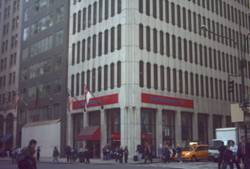
Headquarters: 592 5th Avenue, New York, NY
10036 - USA
Telephone: +1
646-253-9400
Fax: +1 646-253-9600
Website: www.firestardiamond.com
Company
summary
Corporate ID#: 3761016
State: Delaware
Judicial form: Corporation – Profit
Date incorporated: February
4, 2004
Stock: -
Value: -
Name of manager: Nirav
MODI
ACTIVITIES & OPERATIONS
History:
Name changed from FIRESTONE
INC. on 04-14-2011.
Business:
Importer and distributor of diamonds and fine jewelry.
Office of the Foreign
Assets Control (OFAC):
The company is not listed on the OFAC list.
The Specially Designated Nationals (SDN) List is a publication of OFAC
which lists individuals and organizations with whom United States citizens and
permanent residents are prohibited from doing business.
Suppliers include:
FIRESTAR DIAMOND
Mumbai, India
EIN: 27-0082729
Staff: 30
Operations & branches:
At the headquarters, we
find the corporate office and showroom, on lease.
SHAREHOLDERS
& MANAGERS
Shareholders:
FIRESTAR DIAMOND
Trade Point Building (2nd Fl)
Kamala Mills Compound, Lower Parel, Mumbai 400 013 - India
Management:
Nirav MODI is the CEO

He was awarded by Forbes as a new billionaire in March 2013.
Third generation diamantaire and jeweller Nirav Modi, aspires to be the
Laurence Graffe of India. He made a splash in 2010 when his Lotus necklace with
a rare Golconda diamond was auctioned by Christie's for $3 million.
His salon in Mumbai, decorated with artworks from his private
collection, attracts a super-rich clientele.
Modi grew up in Belgium, dropped out of Wharton and moved to India in
1990 to work with his uncle in the diamond trade. In 1999, he struck out on his
own to set up Firestar International Group, which today has revenues of $900
million and manufacturing units in India, Russia, Armenia and South Africa.
It owns American bridal jewellery retailer A. Jaffe and sells to the
American armed forces.
Mihir BHANSALI is the President and CEO of the group.
He has a degree in Business Administration from Babson College, MA (USA)
and has completed executive programs at Harvard and attended seminars at YPO.
They are also involved in:
FIRESTAR DIAMOND INTERNATIONAL, INC.
154 West 14th Street, New York, NY 10011
Incorporated in Delaware on June 8, 2011
ID# 4993677
FINANCIALS
In United States, privately
held corporations are not required to publish any financials.
On a direct call, nobody
was available to answer our questions.
We sent a fax but no answer
received.
However, sales estimate for
year 2013 is in the range of USD 6,000,000=
The business is said to be
profitable.
Banks: Chase
LEGAL
FILINGS
Legal filings
& complaints:
As of today date, there is no legal filing pending with the Courts.
Secured debts
summary (UCC):
None
FOREIGN EXCHANGE RATES
|
Currency |
Unit
|
Indian Rupees |
|
US Dollar |
1 |
Rs.62.14 |
|
|
1 |
Rs.94.79 |
|
Euro |
1 |
Rs.70.38 |
INFORMATION DETAILS
|
Analysis Done by
: |
KAR |
|
|
|
|
Report Prepared
by : |
ANK |
RATING EXPLANATIONS
|
RATING |
STATUS |
PROPOSED CREDIT LINE |
|
|
|
>86 |
Aaa |
Possesses an extremely sound financial base with the strongest capability
for timely payment of interest and principal sums |
Unlimited |
|
|
71-85 |
Aa |
Possesses adequate working capital. No caution needed for credit
transaction. It has above average (strong) capability for payment of interest
and principal sums |
Large |
|
|
56-70 |
A |
Financial & operational base are regarded healthy. General
unfavourable factors will not cause fatal effect. Satisfactory capability for
payment of interest and principal sums |
Fairly Large |
|
|
41-55 |
Ba |
Overall operation is considered normal. Capable to meet normal
commitments. |
Satisfactory |
|
|
26-40 |
B |
Capability to overcome financial difficulties seems comparatively
below average. |
Small |
|
|
11-25 |
Ca |
Adverse factors are apparent. Repayment of interest and principal sums
in default or expected to be in default upon maturity |
Limited with
full security |
|
|
<10 |
C |
Absolute credit risk exists. Caution needed to be exercised |
Credit not
recommended |
|
|
-- |
NB |
New Business |
-- |
|
This score serves as
a reference to assess SC’s credit risk and to set the amount of credit to be
extended. It is calculated from a composite of weighted scores obtained from each
of the major sections of this report. The assessed factors and their relative
weights (as indicated through %) are as follows:
Financial
condition (40%) Ownership
background (20%) Payment
record (10%)
Credit history
(10%) Market trend (10%) Operational size
(10%)
This report is issued at your request without any
risk and responsibility on the part of MIRA INFORM PRIVATE LIMITED (MIPL)
or its officials.