|
|
|



MIRA INFORM REPORT
|
Report No. : |
502461 |
|
Report Date : |
11.04.2018 |
IDENTIFICATION DETAILS
|
Name : |
FOSHAN NATIONSTAR OPTOELECTRONICS CO., LTD |
|
|
|
|
Registered Office : |
No. 18 South Huabao Road, Chancheng
District, Foshan, Guangdong Province 528000 PR |
|
|
|
|
Country : |
China |
|
|
|
|
Financials (as on) : |
31.12.2017 |
|
|
|
|
Date of Incorporation : |
31.08.1981 |
|
|
|
|
Unified
Social Credit Code: |
914406001935264036 |
|
|
|
|
Legal Form : |
Shares Limited Company |
|
|
|
|
Line of Business : |
SC’s
registered business scope includes manufacturing and selling semiconductor
photoelectric device, photoelectric display, LED display, traffic signal
lamp, photoelectric semiconductor lighting lamps lighting, semiconductor
integrated circuit, photoelectric module, electronic tuner, other electronic
parts, components, and information technology equipment products; undertaking
photoelectric display engineering, and lighting engineering; photoelectric
engineering technology development, and consulting, service and item
investment; importing and exporting raw materials & accessories,
machinery, meters & instruments, components and related technology;
processing with imported materials, processing with imported samples,
assemblying with imported parts, and compensation trade in agreement. |
|
|
|
|
No. of Employees : |
5,059 |
RATING & COMMENTS
(Mira Inform has adopted New Rating mechanism w.e.f. 23rd
January 2017)
|
MIRA’s Rating : |
A+ |
|
Credit Rating |
Explanation |
Rating Comments |
|
A+ |
Low Risk |
Business dealings permissible with low
risk of default |
|
Status : |
Good |
|
|
|
|
Payment Behaviour : |
Regular |
|
|
|
|
Litigation : |
Clear |
NOTES :
Any query related to this report can be made
on e-mail : infodept@mirainform.com
while quoting report number, name and date.
ECGC Country Risk Classification List
|
Country Name |
Previous Rating (30.09.2017) |
Current Rating (31.12.2017) |
|
China |
A2 |
A2 |
|
Risk Category |
ECGC
Classification |
|
Insignificant |
A1 |
|
Low Risk |
A2 |
|
Moderately Low Risk |
B1 |
|
Moderate Risk |
B2 |
|
Moderately High Risk |
C1 |
|
High Risk |
C2 |
|
Very High Risk |
D |
CHINA - ECONOMIC OVERVIEW
Since the late 1970s, China has moved from a closed, centrally planned system to a more market-oriented one that plays a major global role. China has implemented reforms in a gradualist fashion, resulting in efficiency gains that have contributed to a more than tenfold increase in GDP since 1978. Reforms began with the phaseout of collectivized agriculture, and expanded to include the gradual liberalization of prices, fiscal decentralization, increased autonomy for state enterprises, growth of the private sector, development of stock markets and a modern banking system, and opening to foreign trade and investment. China continues to pursue an industrial policy, state support of key sectors, and a restrictive investment regime. Measured on a purchasing power parity (PPP) basis that adjusts for price differences, China in 2016 stood as the largest economy in the world, surpassing the US in 2014 for the first time in modern history. China became the world's largest exporter in 2010, and the largest trading nation in 2013. Still, China's per capita income is below the world average.
After keeping its currency tightly linked to the US dollar for years, China in July 2005 moved to an exchange rate system that references a basket of currencies. From mid-2005 to late 2008, the renminbi appreciated more than 20% against the US dollar, but the exchange rate remained virtually pegged to the dollar from the onset of the global financial crisis until June 2010, when Beijing announced it would allow a resumption of gradual liberalization. From 2013 until early 2015, the renminbi (RMB) appreciated roughly 2% against the dollar, but the exchange rate fell 13% from mid-2015 until end-2016 amid strong capital outflows in part stemming from the August 2015 official devaluation; in 2017 the RMB resumed appreciating against the dollar – roughly 7% from end-of-2016 to end-of-2017. From 2013 to 2017, China had one of the fastest growing economies in the world, averaging slightly more than 7% real growth per year. In 2015, the People’s Bank of China announced it would continue to carefully push for full convertibility of the renminbi, after the currency was accepted as part of the IMF’s special drawing rights basket. However, since late 2015 the Chinese Government has strengthened capital controls and oversight of overseas investments to better manage the exchange rate and maintain financial stability.
The Chinese Government faces numerous economic challenges including: (a) reducing its high domestic savings rate and correspondingly low domestic household consumption; (b) managing its high corporate debt burden to maintain financial stability; (c) controlling off-balance sheet local government debt used to finance infrastructure stimulus; (d) facilitating higher-wage job opportunities for the aspiring middle class, including rural migrants and college graduates, while maintaining competitiveness; (e) dampening speculative investment in the real estate sector without sharply slowing the economy; (f) reducing industrial overcapacity; and (g) raising productivity growth rates through the more efficient allocation of capital and state-support for innovation. Economic development has progressed further in coastal provinces than in the interior, and by 2016 more than 169.3 million migrant workers and their dependents had relocated to urban areas to find work. One consequence of China’s population control policy known as the “one-child policy” - which was relaxed in 2016 to permit all families to have two children - is that China is now one of the most rapidly aging countries in the world. Deterioration in the environment - notably air pollution, soil erosion, and the steady fall of the water table, especially in the North - is another long-term problem. China continues to lose arable land because of erosion and urbanization. The Chinese Government is seeking to add energy production capacity from sources other than coal and oil, focusing on natural gas, nuclear, and clean energy development. In 2016, China ratified the Paris Agreement, a multilateral agreement to combat climate change, and committed to peak its carbon dioxide emissions between 2025 and 2030.
The government's 13th Five-Year Plan, unveiled in March 2016, emphasizes the need to increase innovation and boost domestic consumption to make the economy less dependent on government investment, exports, and heavy industry. However, China has made more progress on subsidizing innovation than rebalancing the economy. Beijing has committed to giving the market a more decisive role in allocating resources, but the Chinese Government’s policies continue to favor state-owned enterprises and emphasize stability. Chinese leaders in 2010 pledged to double China’s GDP by 2020, and the 13th Five Year Plan includes annual economic growth targets of at least 6.5% through 2020 to achieve that goal. In recent years, China has renewed its support for state-owned enterprises in sectors considered important to "economic security," explicitly looking to foster globally competitive industries. Chinese leaders also have undermined some market-oriented reforms by reaffirming the “dominant” role of the state in the economy, a stance that threatens to discourage private initiative and make the economy less efficient over time. The slight acceleration in economic growth in 2017—the first such uptick since 2010—gives Beijing more latitude to pursue its economic reforms, focusing on financial sector deleveraging and its Supply-Side Structural Reform agenda, first announced in late 2015.
|
Source
: CIA |
Company
Name And Address
|
COMPANY NAME |
Foshan Nationstar Optoelectronics Co., Ltd. |
|
CURRENT ADDRESS/ REGISTERED ADDRESS |
No. 18 South Huabao Road,
Chancheng District, Foshan, Guangdong Province 528000 PR China |
|
TEL. NO. |
86 (0) 757-82100231/82100271 |
|
FAX NO. |
86 (0) 757-82100268 |
EXECUTIVE
SUMMARY
Date of Registration : AUGUST
31, 1981
Unified social credit code : 914406001935264036
LEGAL FORM : SHARES
LIMITED COMPANY
REGISTERED CAPITAL : CNY 475,751,669
staff : 5,059
BUSINESS CATEGORY : manufacturing & TRADING
REVENUE : CNY
3,472,602,000 (CONSOLIDATED, AS OF
DEC. 31, 2017)
EQUITIES : CNY
3,172,685,000 (CONSOLIDATED, AS OF
DEC. 31, 2017)
WEBSITE : www.nationstar.com
E-MAIL : stock@nationstar.com
PAYMENT : REGULAR
MARKET CONDITION : COMPETITIVE
FINANCIAL CONDITION : fairly good
OPERATIONAL TREND : STEADY
GENERAL REPUTATION : AVERAGE
Adopted abbreviations (as follows)
SC -
Subject Company (the company inquired by you)
N/A – Not
available
CNY –
China Yuan Ren Min Bi
OPERATIONAL
TREND & GENERAL REPUTATION
This section aims at indicating the relative positions of SC
in respect of its operational trend & general reputation
Operational Trend:- General
Reputation:-
Upward Excellent
Steady Good
Fairly Steady Fairly
Good
Ordinary Average
Fair Fair
Stagnant Detrimental
Downward Not
known
Not known Not
yet be determined
Not yet be determined
LEGAL
STATUS & HISTORY
SC was established as shares limited company of PRC with State Administration of
Industry & Commerce (SAIC) under unified social credit code:
914406001935264036.
SC’s Import and Export Enterprise
Code: 4400193526403
SC’s registered capital: CNY
475,751,669
SC’s paid-in capital: CNY
475,751,669
Registration Change Record:-
|
Date |
Change of Contents |
Before the change |
After the change |
|
2012 |
Registered Capital |
CNY 215,000,000 |
CNY 430,000,000 |
|
2014-12-18 |
Legal Representative |
Wang Yaohao |
He Yong |
|
2015-9-2 |
Registered Capital |
CNY 430,000,000 |
CNY 475,751,669 |
Current Co search indicates SC’s shareholders & chief
executives are as follows:-
|
Name of Shareholder (s) (As of Dec. 31, 2017) |
% of Shareholding |
|
Foshan Xigema Venture Capital Co., Ltd. |
12.9 |
|
Guangdong Guangsheng Asset Management Co., Ltd. |
7.48 |
|
Cai Juyi |
2.9 |
|
National Social Security Fund 118 Combination |
2.61 |
|
Wang Yaohao |
2.46 |
|
Other Shareholders |
71.65 |
SC’s Chief Executives:-
|
Position |
Name |
|
Legal Representative and
Chairman |
He
Yong |
|
General Manager |
Wang
Sen |
|
Deputy General Manager |
Li Cheng |
|
Liuai Canzi |
|
|
Li Qiying |
|
|
Wang Haijun |
|
|
Yan Chunhui |
|
|
Song Daihui |
RECENT
DEVELOPMENT
SC was listed in Shenzhen Stock Exchange Market with the
code of 002449.
SHAREHOLDER
CHART & BACKGROUND
Name %
of Shareholding
(As of As of Dec. 31, 2017)
---------------------------------
Foshan Xigema Venture Capital
Co., Ltd. 12.9
Guangdong Guangsheng Asset
Management Co., Ltd. 7.48
Cai Juyi 2.9
National Social Security Fund
118 Combination 2.61
Wang Yaohao 2.46
Other Shareholders 71.65
 Foshan
Xigema Venture Capital Co., Ltd.
Foshan
Xigema Venture Capital Co., Ltd.
-------------------------------------------------------
Date of Registration: April 26, 2007
Unified Social Credit Code: 91440600661491804M
Registered Capital: CNY 50,000,000
Guangdong
Guangsheng Asset Management Co., Ltd.
----------------------------------------------------------------------
Date of Registration: December 23, 1999
Unified Social Credit Code: 91440000719283849E
Registered Capital: CNY 10,000,000,000
MANAGEMENT
He Yong , Legal Representative and Chairman
--------------------------------------------------------------------
Ø Gender:
M
Ø Nationality:
China
Ø Age:
58
Ø Qualification:
MBA
Ø Working
experience (s):
At present, working in SC
as legal representative and chairman
Wang Sen , General Manager
----------------------------------------------
Ø Gender:
M
Ø Nationality:
China
Ø Age:
45
Ø Qualification:
University
Ø Working
experience (s):
At present, working in SC
as general manager
Deputy General Manager
---------------------------------
Li Cheng
Liuai Canzi
Li Qiying
Wang Haijun
Yan Chunhui
Song Daihui
BUSINESS
OPERATION
SC’s
registered business scope includes manufacturing and selling semiconductor photoelectric
device, photoelectric display, LED display, traffic signal lamp, photoelectric
semiconductor lighting lamps lighting, semiconductor integrated circuit,
photoelectric module, electronic tuner, other electronic parts, components, and
information technology equipment products; undertaking photoelectric display
engineering, and lighting engineering; photoelectric engineering technology
development, and consulting, service and item investment; importing and
exporting raw materials & accessories, machinery, meters & instruments,
components and related technology; processing with imported materials,
processing with imported samples, assemblying with imported parts, and
compensation trade in agreement.
SC is
mainly engaged in manufacturing and selling semiconductor photoelectric device,
photoelectric display, etc.
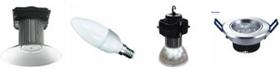
SC’s
products mainly include:
LED
Flood Light
LED
Ceiling light
LED
Plant Lighting
LED
Strip Light
LED
Panel Light
LED
Tunnel Light
LED
Table Lamp
LED
Spot Light
LED
High Bay Lamp
LED
Street Light
LED
Down Light
LED
Bulb
LED
Tube
LED
Module
SC
sources its materials 70% from domestic market, and 30% from the overseas
market. SC sells 40% of its products in domestic market, and 60% to the
overseas market, mainly U.S.A., Pakistan and India.
The buying terms of SC include T/T, L/C and Credit of 30-60
days. The payment terms of SC include T/T, L/C and Credit of 30-60 days.
*Major Customers:
==============
Qbd Cooling Systems Inc.
Jesco Lighting Inc.
New Advantage Corporation
Staff & Office:
--------------------------
SC is
known to have approx. 5,059
staff at present.
SC
owns an area as its operating office and factory, but the detailed information
is unknown.
RELATED
COMPANY
SC is
known to have the following subsidiaries:
Wuxi Guoxing Photoelectricity Science & Technology Co., Ltd.
Foshan NationStar Electronics Manufacturing Co., Ltd.
Foshan NationStar Semiconductor Technology Ltd.
Nanyang Baoli Vanadium Industry Co., Ltd.
Xinye NationStar Semiconductor Lighting Co., Ltd.
Foshan NationStar General Lighting Co., Ltd.
Xurui Photoelectricity Co., Ltd.
Etc.
PAYMENT
Overall payment appraisal:
( ) Excellent ( )
Good (X) Average ( ) Fair ( ) Poor ( ) Not yet be determined
The appraisal serves as a reference to reveal SC's payments
habits and ability to pay. It is based
on the 3 weighed factors: Trade payment experience (through current enquiry
with SC's suppliers), our delinquent payment and our debt collection record
concerning SC.
Trade payment experience: SC
did not provide any name of trade/service suppliers and we have no other
sources to conduct the enquiry at present.
Delinquent payment record: None
in our database.
Debt collection record: No
overdue amount owed by SC was placed to us for collection within the last 6
years.
BANKING
Basic Bank:
China Construction Bank Foshan Chengxi Sub-branch
AC#: 44001668640053002650
FINANCIALS
Consolidated Balance Sheet
|
Unit:
CNY’000 |
As of Dec. 31, 2016 |
As of Dec. 31, 2017 |
|
907,879 |
820,635 |
|
|
Accounts
receivable |
608,776 |
608,242 |
|
Notes
receivable |
791,835 |
1,181,917 |
|
Advances
to suppliers |
71,206 |
37,222 |
|
Interest
receivable |
1,045 |
1,066 |
|
Other
receivable |
69,124 |
4,825 |
|
Inventory |
678,327 |
866,020 |
|
Non-current
assets within one year |
0 |
0 |
|
Other
current assets |
312,321 |
253,021 |
|
|
------------------ |
------------------ |
|
Current
assets |
3,440,513 |
3,772,948 |
|
Long-term
investments |
4,805 |
0 |
|
Real
estate investment |
0 |
0 |
|
Fixed
assets |
1,795,497 |
2,105,005 |
|
Construction
in progress |
228,310 |
182,766 |
|
Project
materials |
0 |
0 |
|
Fixed
assets in liquidation |
0 |
0 |
|
Intangible
assets |
140,679 |
125,698 |
|
Goodwill |
13,866 |
10,492 |
|
Long-term
deferred expense |
9,774 |
9,039 |
|
Deferred
income tax assets |
8,588 |
13,022 |
|
Other
non-current assets |
33,995 |
51,198 |
|
|
------------------ |
------------------ |
|
Total
assets |
5,676,027 |
6,270,168 |
|
|
============= |
============= |
|
Short-term
loans |
37,088 |
424,640 |
|
Notes
payable |
1,094,888 |
1,459,568 |
|
Accounts
payable |
687,418 |
864,346 |
|
Payroll
payable |
40,123 |
58,895 |
|
Taxes
payable |
20,539 |
32,493 |
|
Interest
payable |
0 |
311 |
|
Advances
from clients |
21,969 |
38,159 |
|
Other
payable |
17,995 |
26,267 |
|
Other
current liabilities |
622,215 |
0 |
|
|
------------------ |
------------------ |
|
Current
liabilities |
2,542,235 |
2,904,679 |
|
Non-current
liabilities |
212,671 |
192,804 |
|
|
------------------ |
------------------ |
|
Total
liabilities |
2,754,906 |
3,097,483 |
|
Equities |
2,921,121 |
3,172,685 |
|
|
------------------ |
------------------ |
|
Total
liabilities & equities |
5,676,027 |
6,270,168 |
|
|
============= |
============= |
Consolidated Income Statement
|
Unit:
CNY’000 |
As
of Dec. 31, 2016 |
As
of Dec. 31, 2017 |
|
Revenue |
2,418,424 |
3,472,602 |
|
Cost of sales |
1,897,102 |
2,650,579 |
|
Business Taxes and Surcharges |
11,141 |
18,291 |
|
Sales expense |
59,523 |
86,330 |
|
Management expense |
210,531 |
267,919 |
|
Finance expense |
30,368 |
33,948 |
|
Asset impairment loss |
32,778 |
60,168 |
|
Investment
income |
7,065 |
11,280 |
|
Non-operating
income |
33,685 |
4,130 |
|
Non-operating expense |
3,134 |
5,491 |
|
Profit
before tax |
214,595 |
407,620 |
|
Less:
profit tax |
39,095 |
60,975 |
|
175,500 |
346,645 |
Important
Ratios
=============
|
|
As of Dec. 31, 2016 |
As of Dec. 31, 2017 |
|
*Current
ratio |
1.35 |
1.30 |
|
*Quick
ratio |
1.09 |
1.00 |
|
*Liabilities
to assets |
0.49 |
0.49 |
|
*Net
profit margin (%) |
7.26 |
9.98 |
|
*Return
on total assets (%) |
3.09 |
5.53 |
|
*Inventory
/ Revenue ×365 |
103
days |
92
days |
|
*Accounts
receivable/ Revenue ×365 |
92 days |
64
days |
|
*
Revenue/Total assets |
0.43 |
0.55 |
|
*
Cost of sales / Revenue |
0.78 |
0.76 |
FINANCIAL
COMMENTS
PROFITABILITY:
FAIRLY GOOD
l The
revenue of SC appears fairly good in its line.
l SC’s
net profit margin is fairly good.
l SC’s return
on total assets is fairly good.
l
SC’s cost of goods sold is average,
comparing with its revenue.
LIQUIDITY:
AVERAGE
l
The current ratio of SC is maintained
in a normal level.
l
SC’s quick ratio is maintained in a
fairly good level.
l
The inventory of SC appears large.
l
The accounts receivable of SC appears
average.
l
SC’s short-term loans are in an average
level.
l
SC’s revenue is in a fair level,
comparing with the size of its total assets.
LEVERAGE:
FAIRLY GOOD
l
The debt ratio of SC is low.
l
The risk for SC to go bankrupt is low.
Overall
financial condition of the SC: Fairly Good.
CONCLUSIONS
SC is considered large-sized in its line with fairly good
financial conditions. Taking into consideration of SC’s general performance, reputation
as well as market conditions
FOREIGN EXCHANGE RATES
|
Currency |
Unit
|
Indian Rupees |
|
US Dollar |
1 |
INR 64.94 |
|
|
1 |
INR 91.75 |
|
Euro |
1 |
INR 79.90 |
|
CNY |
1 |
INR 10.39 |
Note :
Above are approximate rates obtained from sources believed to be correct
INFORMATION DETAILS
|
Analysis Done by
: |
PRA |
|
|
|
|
Report Prepared
by : |
KET |
RATING EXPLANATIONS
|
Credit Rating |
Explanation |
Rating Comments |
|
A++ |
Minimum Risk |
Business dealings permissible with minimum
risk of default |
|
A+ |
Low Risk |
Business dealings permissible with low
risk of default |
|
A |
Acceptable Risk |
Business dealings permissible with
moderate risk of default |
|
B |
Medium Risk |
Business dealings permissible on a regular
monitoring basis |
|
C |
Medium High Risk |
Business dealings permissible preferably
on secured basis |
|
D |
High Risk |
Business dealing not recommended or on
secured terms only |
|
NB |
New Business |
No recommendation can be done due to
business in infancy stage |
|
NT |
No Trace |
No recommendation can be done as the
business is not traceable |
NB is stated where there is insufficient information to facilitate rating. However, it is not to be considered as unfavourable.
This score serves as a reference to assess
SC’s credit risk and to set the amount of credit to be extended. It is
calculated from a composite of weighted scores obtained from each of the major
sections of this report. The assessed factors are as follows:
·
Financial
condition covering various ratios
·
Company
background and operations size
·
Promoters
/ Management background
·
Payment
record
·
Litigation
against the subject
·
Industry
scenario / competitor analysis
·
Supplier
/ Customer / Banker review (wherever available)
This report is issued at
your request without any risk and responsibility on the part of MIRA INFORM
PRIVATE LIMITED (MIPL) or its officials.